
Lesson 6 of 11
The Beekeeping Year: A Seasonal Calendar
How a colony's needs change across the year — from spring buildup through summer nectar flow, fall preparation, and the winter cluster — with cold-climate specifics from Ontario.
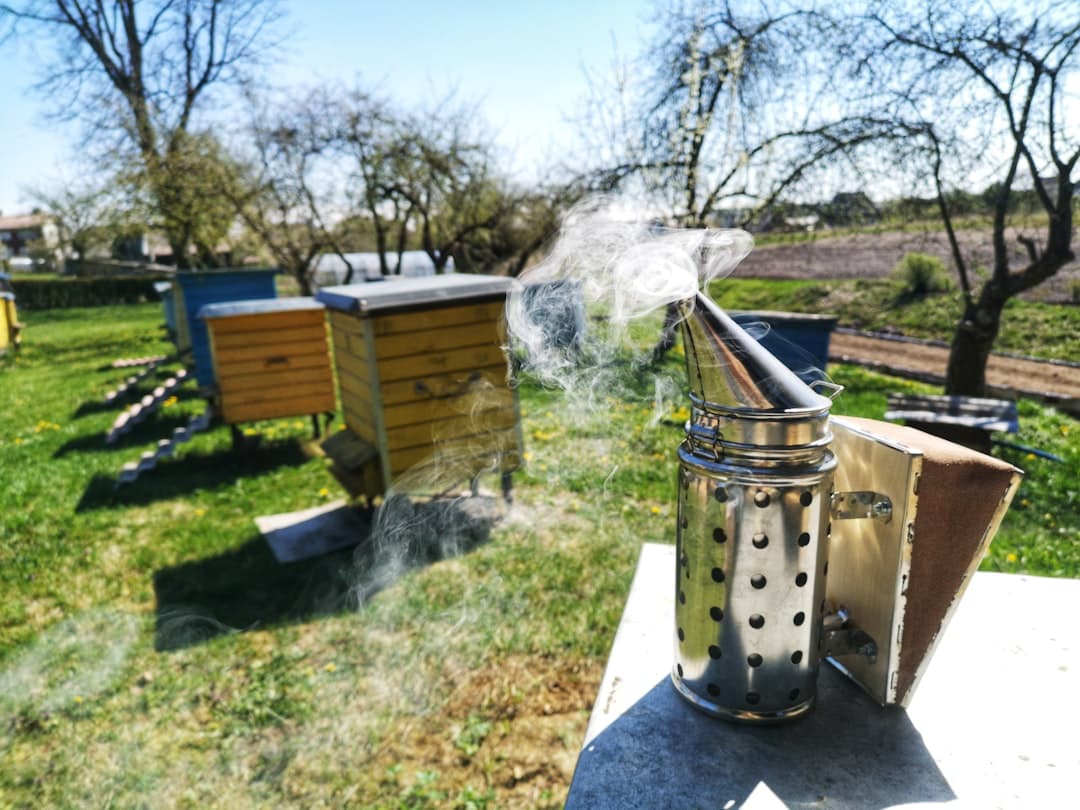
Almost everything a beekeeper does is timed against the colony's own seasonal rhythm, not a fixed calendar. This lesson walks through that rhythm in a temperate climate, with some specific cold-climate benchmarks from Ontario as a concrete reference point — adjust the timing for your own latitude and climate, but the underlying pattern holds broadly.
Spring: buildup and the start of swarm season
As temperatures rise and forage becomes available, the queen ramps up egg-laying and the colony's population grows quickly. This is typically the busiest inspection season: colonies need more room added as they expand, and swarm season begins as strong colonies start preparing to reproduce by splitting (covered in the swarm-prevention lesson). It's also when many new colonies — packages, nucs, or captured swarms — are installed, since a full growing season ahead gives them the best chance to build up before winter.
Summer: nectar flow and population peak
Summer typically brings the main nectar flow in most temperate regions, when foragers bring in the bulk of the year's surplus honey. Colony population usually peaks during this period. Inspections continue on a regular rhythm, watching for adequate space (adding honey supers as needed), continued healthy brood patterns, and early signs of pests as populations — and pest populations alongside them — reach their yearly high point.
Fall: preparing for winter
Fall is when a beekeeper's decisions have the most direct effect on whether a colony survives winter. Two things matter most:
- Mite treatment timing. Varroa mite populations build up through the season and tend to peak in late summer, right as the colony is rearing the "winter bees" that need to survive months without a break to forage or rear brood. A commonly cited target is treating early enough that Varroa levels are below roughly 3% by late summer/early fall, since mite levels compound heading into winter and late treatment is far less effective at protecting the winter generation. Exact thresholds and timing vary by region — check local extension or apiary program guidance for numbers that apply where you keep bees.
- Food stores. A colony needs substantial reserves to survive winter without foraging. One concrete, cold-climate benchmark (from Ontario's provincial guidance) is roughly 32 kg (70 lb) of stores for a single brood chamber, or 45 kg (100 lb) for a double brood chamber, going into winter — plus, if needed, roughly 15 litres (4 gallons) of supplemental syrup feeding to top up a light colony before it's too cold to feed (covered in more detail in the next lesson). A full-sized colony heading into a cold winter should also have a solid population — that same guidance references 7-8 frames of bees as a benchmark for a colony's chances of coming through winter in good shape. Treat these as illustrative numbers for a cold climate, not a target that applies everywhere — a milder-winter region needs less of a cushion.
Winter: the cluster
Once temperatures drop consistently, bees stop rearing brood in earnest and form a tight cluster: workers pack together around the queen, generating heat by vibrating their flight muscles without flying, and rotating positions so bees on the cold outer edge of the cluster periodically move toward the warmer center. The cluster slowly moves through the hive's stores as winter progresses, which is why stores need to be positioned where the cluster can reach them, not just present somewhere in the hive. A beekeeper's winter role is mostly hands-off monitoring — checking that entrances aren't blocked by snow or dead bees, occasionally hefting a hive to estimate remaining stores — rather than opening the hive itself in cold weather, which does more harm than good.
Sources & Further Reading
This lesson paraphrases general seasonal-cycle guidance from the FAO and Wikibooks, and specific cold-climate overwintering and Varroa-threshold benchmarks — verified directly from the source page — from OMAFRA, reproduced under the Open Government Licence – Ontario, which permits adaptation with attribution.
- FAO. Good Beekeeping Practices for Sustainable Apiculture. 2021. Licensed under CC BY 3.0 IGO. https://www.fao.org/documents/card/en/c/cb4923en
- Wikibooks contributors. Beekeeping. Licensed under CC BY-SA 4.0. https://en.wikibooks.org/wiki/Beekeeping
- Government of Ontario / OMAFRA. Best Management and Biosecurity Practices for Beekeeping in Ontario. Licensed under the Open Government Licence – Ontario. https://www.ontario.ca/page/best-management-and-biosecurity-practices-beekeeping-ontario
Why is spring often the highest-workload season for a beekeeper?
Roughly what threshold do apiculture programs commonly recommend keeping Varroa mite levels below in late summer/early fall for good winter survival odds?
What is the main purpose of the winter cluster?