
Lektion 2 av 6
Making Increase: Splits and Nucs
Deliberately growing your number of colonies — split types beyond basic swarm prevention, sizing nucs, and how to tell whether a new split has actually taken.
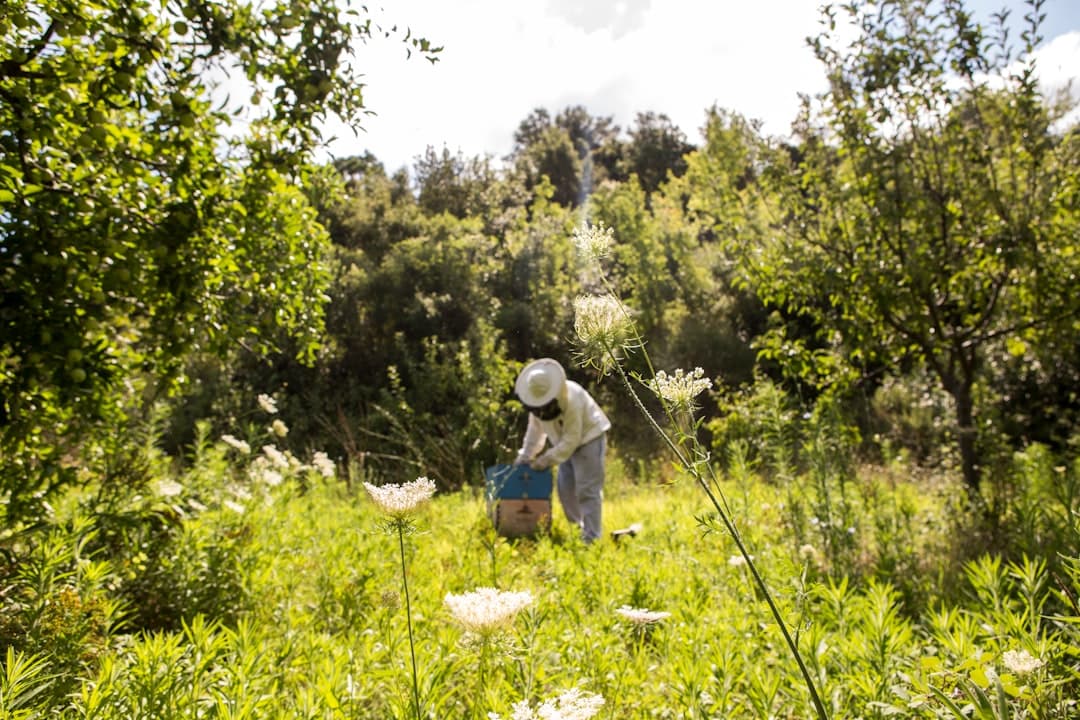
Fundamentals introduced splitting mainly as a way to relieve the crowding that drives swarming. Once you're managing more than one or two colonies, splitting becomes a growth tool in its own right — a deliberate way to expand an apiary, replace expected winter losses, or produce nucs to sell, rather than just a reaction to swarm season.
Split types
Even (walk-away) splits divide a strong colony's frames of bees, brood, and stores roughly in half between two boxes. One half keeps the original queen and continues as normal; the other is left queenless with eggs or young larvae so it raises its own emergency queen, as covered in the queen-rearing lesson. This is the simplest form of increase — no queen needs to be sourced in advance — but it takes the resulting queen's genetics as whatever the colony selects, and both halves are temporarily weaker than the original single colony.
Queen-right relocation splits take the opposite approach: the existing queen and a portion of bees and brood are moved to a new location to start a fresh colony immediately with a known, already-mated queen, while the original hive (left in its old location, which matters — see below) becomes queenless and raises its own replacement. This gets one half productive faster, at the cost of the other half needing the same weeks-long requeening process as a walk-away split.
Nuc-sized increase takes a strong colony's surplus — a few frames of brood and bees beyond what it needs for itself — and forms several small (commonly 4-5 frame) nucleus colonies rather than one even split. Each nuc needs its own queen (purchased, grafted, or a queen cell), and this approach lets a single strong "donor" colony produce multiple new units without ever being reduced to half strength itself.
A detail that trips up new splitters: forager drift
Foraging bees orient to a hive's specific location, not to the box itself — if you simply move a queenless split a short distance within the same apiary, its foragers will drift back to the original hive's location rather than staying with their new queenless half, weakening exactly the colony that needs population most while it raises a new queen. The common workarounds are moving a new split far enough away that foragers can't find their way back (often several kilometres, well beyond a colony's normal orientation range), or physically relocating the original hive a short distance and leaving the new split in the old spot, so it's the split — not the move — that inherits the location's existing forager traffic.
Evaluating whether a split took
A split isn't confirmed successful until it demonstrably becomes a normal, functioning colony:
- Check for a laying queen within roughly 3-4 weeks of a walk-away split (accounting for the full queen-rearing timeline covered in the previous lesson) — eggs and young larvae are the clearest sign it worked.
- Watch population trend, not just a single snapshot — a split that's holding steady or growing over successive checks is doing fine; one that's visibly shrinking may have lost its queen (a failed mating flight, predation, or a poor introduction) and needs intervention.
- Confirm adequate stores in each half — a small split, in particular, can run short of food faster than a full-sized colony, and may need feeding support (see the feeding lesson from Fundamentals) while it builds up.
- Give it enough of the season. As with any new colony, a split needs enough time before winter to build population and stores — making splits too late in the season is one of the more common ways beekeepers end up with an increase colony that doesn't survive its first winter.
Sources & Further Reading
This lesson paraphrases general split-technique and colony-increase guidance from the FAO and Wikibooks.
- FAO. Good Beekeeping Practices for Sustainable Apiculture. 2021. Licensed under CC BY 3.0 IGO. https://www.fao.org/documents/card/en/c/cb4923en
- Wikibooks contributors. Beekeeping. Licensed under CC BY-SA 4.0. https://en.wikibooks.org/wiki/Beekeeping
What does 'making increase' mean in a beekeeping context?
In a walk-away split, how does the queenless half get a new queen?
Why does timing matter when deciding whether to make a split?