
Leçon 1 sur 11
What Is Beekeeping?
An orientation to what beekeeping involves day-to-day, season-to-season, and what it actually takes to keep a colony of honey bees alive and productive.
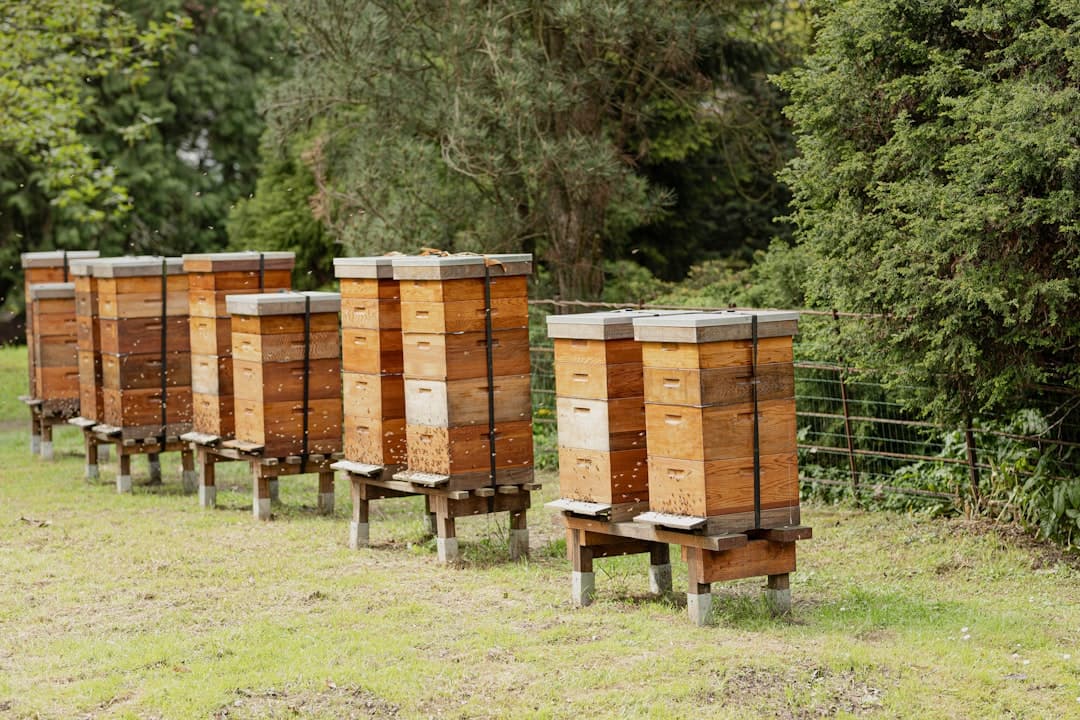
Beekeeping is the practice of maintaining colonies of honey bees, usually in human-made hives, so that the bees can be managed for pollination, honey and other hive products, or simply for the experience of keeping them. It sits somewhere between agriculture and animal husbandry: you're not domesticating an individual animal the way you would a chicken or a goat, you're providing a home and periodic care to a wild, highly organized insect society that does almost all of the actual work itself.
The beekeeper's actual job
New beekeepers often picture the job as something done constantly and by hand — suits, smoke, frames pulled every few days. In practice, a honey bee colony runs its own day-to-day operations: foraging, brood-rearing, temperature regulation, and defense are all handled internally without any input from the keeper. The beekeeper's role is closer to a periodic caretaker and observer:
- Providing suitable housing — a hive body sized and configured for the colony's needs, in a reasonable location.
- Monitoring — opening the hive on a regular but not constant cadence to check for a laying queen, adequate food stores, and signs of pests, disease, or overcrowding.
- Intervening when needed — adding space before the colony gets congested, feeding during dearth, treating for pests when thresholds are crossed, and preventing or managing swarms.
- Harvesting responsibly — taking a honey surplus only after the colony's own winter or dry-season needs are secured.
Across a typical temperate-climate year, that translates to roughly weekly inspections through spring and summer, lighter and less frequent checks in fall, and largely hands-off monitoring in winter, punctuated by a handful of higher-effort periods: initial spring buildup, swarm season, and fall preparation.
Why people keep bees
Motivations vary, and they change what "success" looks like for a given beekeeper:
- Pollination — honey bees are effective generalist pollinators for many garden and orchard crops, and a hobby hive can measurably improve fruit and vegetable set nearby.
- Honey and hive products — honey, beeswax, and propolis are the most visible outputs, though a new hive typically shouldn't be harvested aggressively in its first year.
- Environmental interest and education — many keepers are drawn in by the biology and social structure of the colony itself.
- Small-scale income — honey sales, nucs (starter colonies), and pollination contracts, though this is a different scale of commitment than a backyard hive or two.
None of these require expert-level experience to begin, but they do require a realistic understanding of the cost and time involved before committing.
What it takes to start
At a minimum, starting requires:
- A colony — bees themselves, acquired as a package, a nucleus colony ("nuc"), or a captured/rehomed swarm (covered in Lesson 4).
- Equipment — a hive (most commonly a Langstroth hive in North America, though top-bar and other designs exist — covered in Lesson 3), plus basic tools and protective gear.
- A suitable site — enough space, some sun and wind protection, water access, and awareness of neighbors and any local rules on hive placement or registration.
- Time and attention — the weekly-inspection cadence described above, plus willingness to learn to read what's happening inside a hive.
- Some upfront cost — equipment and bees represent a real first-year investment, before any honey is harvested.
None of this needs to be intimidating. Beekeeping has a learning curve, but it's one that generations of first-time keepers have climbed using exactly the same fundamentals covered in this course: understanding the colony, giving it appropriate equipment, learning to read a frame, and following the seasonal rhythm the bees themselves are already tuned to.
What this course covers
This course builds from the colony outward: bee biology and colony structure, hive types and equipment, acquiring your first bees, your first inspection, the seasonal calendar that governs almost everything a beekeeper does, feeding and nutrition, pest and disease management, swarm prevention, and finally harvesting. Each lesson is meant to be read in order the first time through, and referenced individually afterward.
Sources & Further Reading
This lesson draws on general orientation material from the Food and Agriculture Organization of the United Nations' Good Beekeeping Practices for Sustainable Apiculture and the community-maintained Wikibooks Beekeeping text, both openly licensed for reuse with attribution.
- FAO. Good Beekeeping Practices for Sustainable Apiculture. 2021. Licensed under CC BY 3.0 IGO. https://www.fao.org/documents/card/en/c/cb4923en
- Wikibooks contributors. Beekeeping. Licensed under CC BY-SA 4.0. https://en.wikibooks.org/wiki/Beekeeping
Which of these best describes a honey bee colony?
Which of these is a realistic first-year time commitment for a single hobby hive?