
Leçon 9 sur 11
Swarm Prevention and Colony Growth
Why healthy colonies swarm, how to tell swarm cells from supersedure cells, and how splitting a colony works with — rather than against — that instinct.
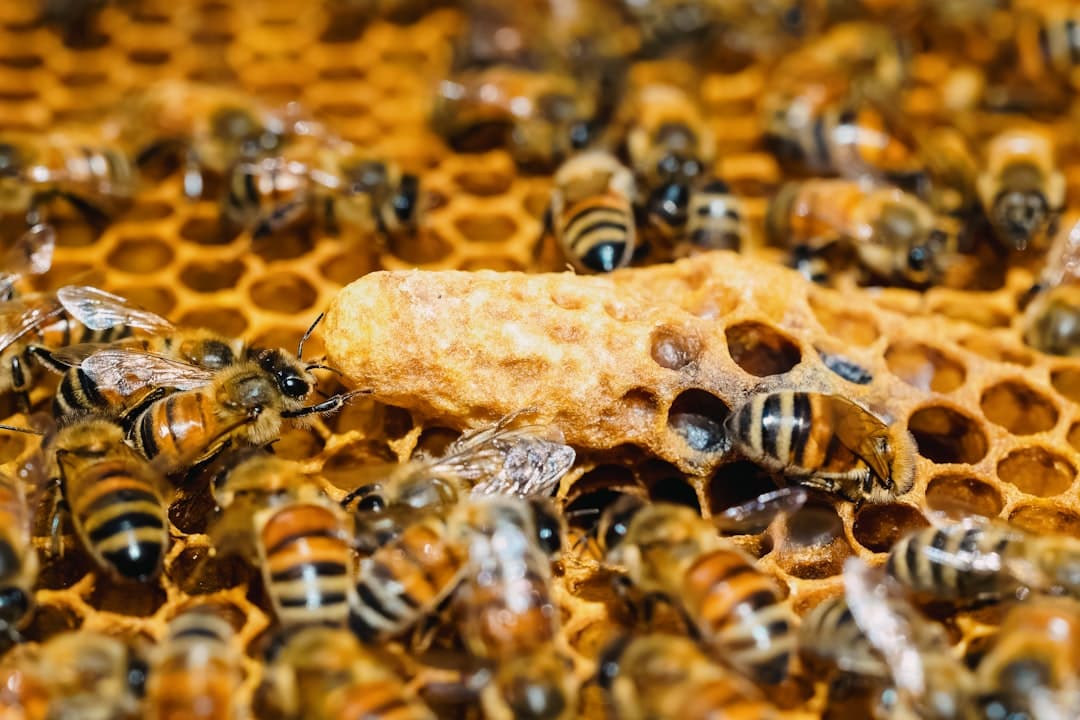
Swarming is the single most misunderstood behavior in beekeeping for newcomers — it isn't a malfunction, it's a strong colony doing exactly what a strong colony is built to do. This lesson covers why it happens, how to see it coming, and how splitting lets a beekeeper redirect that instinct instead of just losing bees to it.
Why colonies swarm
Swarming is a honey bee colony's method of reproduction at the colony level — not the individual level. When a colony becomes strong and crowded, with abundant brood, stores, and population relative to the space it has, it prepares to split itself in two: the existing queen leaves with roughly half the workforce to found a new colony elsewhere, while the bees left behind raise a new queen from eggs or young larvae already in the nest. Both halves have a real chance to thrive — it's a successful outcome for the bees, even though a beekeeper usually experiences it as losing a large portion of a hive's population (and its honey-producing potential) with little warning.
The conditions that push a colony toward swarming are fairly predictable: a strong, rapidly-growing population; a broodnest that's become congested with little room for the queen to keep laying; abundant incoming nectar and pollen; and, often, an older queen. Recognizing these conditions early is most of swarm prevention.
Reading queen cells
Queen cells are distinctive — larger, elongated, and peanut-shaped compared to regular worker or drone cells — and where they appear on a frame is meaningful:
- Swarm cells typically hang from the bottom edge or lower margins of a frame. Multiple swarm cells appearing together, especially alongside a crowded, thriving colony, is the clearest signal that swarm preparations are underway.
- Supersedure cells are more often built on the flatter comb face toward the middle of a frame, usually in smaller numbers (sometimes just one or two). Supersedure is the colony quietly replacing a failing or aging queen with a new one — it's a health-maintenance behavior, not reproduction, though a colony that doesn't swarm can still supersede.
- Emergency cells appear when a queen is suddenly lost (injury, disease, or beekeeper error) and workers rush to raise a new one from whatever young larvae are available — often visually rougher and built directly out from existing worker cells rather than purpose-built from the start.
Seeing queen cells doesn't automatically mean a swarm is imminent, but it's always worth understanding which type you're looking at and why.
Absconding: not the same as swarming
Absconding looks superficially similar to swarming from the outside — the bees are suddenly gone — but the cause and outcome are very different. In a swarm, the colony is thriving and splits itself in two, with the departing bees leaving brood, stores, and a portion of the workforce behind to carry on. In absconding, the entire colony abandons the hive together, leaving no brood, no bees, and often not much honey behind. It isn't reproduction; it's the colony escaping conditions it can no longer tolerate.
Absconding tends to follow some form of severe stress rather than success and abundance: a heavy pest or disease burden (especially Varroa or wax moth damage), repeated robbing or predation, overheating, a lack of forage or a sudden dearth, excessive disturbance from the beekeeper, or a hive that's otherwise become uninhabitable (damaged comb, ants, poor ventilation). It's more common in warmer climates and with more defensive/africanized stock, but any colony pushed far enough can abscond.
The practical difference matters for how a beekeeper reacts: swarm cells are a sign of a healthy, crowded colony and call for the management steps below; a sudden, total absconding event calls for figuring out what made the hive unlivable — checking for pests, robbing damage, or hive conditions — before restocking that box, or the next colony may do the same thing.
Preventing swarms
The core idea behind swarm prevention is simple: address the conditions that push a colony toward swarming before it commits to the process.
- Give the queen room to lay — add frames or a new box proactively when the brood nest looks congested, rather than waiting until it's obviously packed.
- Relieve nectar/pollen congestion — add honey supers early enough that incoming forage isn't backing up into brood-nest space.
- Requeen aging queens — colonies with a young, vigorous queen are generally less swarm-prone than those with an older one.
- Check regularly during swarm season (see the seasonal-calendar lesson) specifically for early swarm cells, since prevention works best before cells are capped.
Splitting: working with the instinct instead of against it
A split deliberately does what a swarm would do anyway, but under the beekeeper's control: frames of bees, brood, and stores are moved from a strong, crowded colony into a new hive, and the new colony either receives a purchased queen or is left to raise its own from young larvae/eggs already present. Splitting relieves the crowding that drives swarming, turns one strong colony into two productive ones instead of losing half a colony to parts unknown, and is one of the most common ways established beekeepers grow their own apiary without buying new bees each year.
Sources & Further Reading
This lesson paraphrases general swarm-biology and colony-management guidance from the FAO and Wikibooks.
- FAO. Good Beekeeping Practices for Sustainable Apiculture. 2021. Licensed under CC BY 3.0 IGO. https://www.fao.org/documents/card/en/c/cb4923en
- Wikibooks contributors. Beekeeping. Licensed under CC BY-SA 4.0. https://en.wikibooks.org/wiki/Beekeeping
Why do healthy honey bee colonies swarm?
Where are swarm cells typically located on a frame, compared to supersedure cells?
What is a 'split', in beekeeping terms?