
Lección 10 de 11
Harvesting and Enjoying Your Honey
How to tell honey is ready to harvest, the basics of extraction, and making sure the colony keeps enough for itself before you take any surplus.
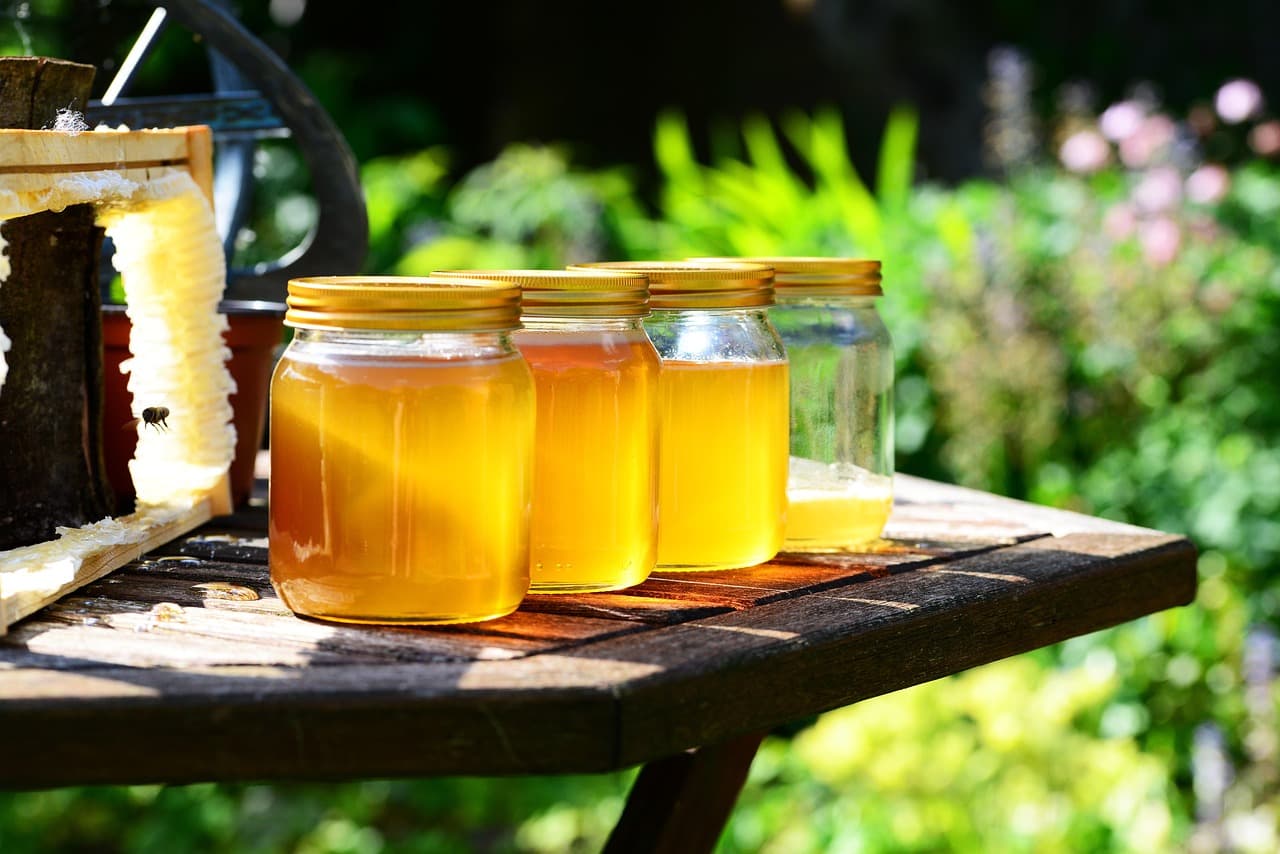
Harvesting is the payoff most new beekeepers picture when they start — but the most important rule of harvesting is knowing what not to take, not just how to take it.
Take surplus only
Before harvesting anything, the colony's own needs come first: enough stores to survive winter (see the seasonal-calendar lesson for concrete weight targets) or a dearth period, whichever is the next challenge the colony faces. Only honey genuinely surplus to that need should ever leave the hive. This is worth repeating because it's one of the most common and entirely preventable ways new beekeepers lose a colony — a satisfying harvest in late summer that leaves the colony short going into winter.
Knowing when honey is ready
Bees cap a honey cell with a thin layer of wax only once they've evaporated its moisture content down to a stable level — generally under roughly 18-20% — at which point it resists fermentation indefinitely. That capping is the single best readiness signal a beekeeper has without lab equipment: a frame that's mostly capped is ready; uncapped, watery honey extracted too early can ferment in storage. As a rule of thumb, most beekeepers wait until a frame is at least three-quarters capped before pulling it for extraction.
The basics of extraction
- Remove frames from the hive and bring them somewhere bees won't immediately try to rob the exposed honey back (a closed room, not the open apiary).
- Uncap the cells — a heated or serrated uncapping knife, or an uncapping fork, slices or pierces the thin wax cappings off each face of the frame, exposing the liquid honey underneath without destroying the comb structure itself.
- Extract — uncapped frames go into an extractor, a drum that spins the frames so centrifugal force flings honey out of the cells and against the drum wall, where it drains to a collection point at the bottom. Small-scale hobbyist extractors are hand-cranked; larger operations use motorized ones.
- Strain and settle — extracted honey is typically strained through a coarse mesh to remove wax fragments and other debris, then left to settle briefly so air bubbles rise out before bottling.
- Return the comb, once drained, to the hive — because extraction leaves the comb structure largely intact, bees can reuse and re-fill it rather than needing to draw entirely new comb from scratch, which saves them significant energy.
Storing and enjoying honey
Properly cured, capped honey is naturally shelf-stable for a very long time at room temperature, thanks to its low moisture content and natural acidity — refrigeration isn't necessary and can actually accelerate crystallization. Crystallized honey isn't spoiled; it can be gently warmed (a warm water bath, well below a boil, is the traditional method) to return it to a liquid state without damaging its flavor or nutritional properties.
Sources & Further Reading
This lesson paraphrases general harvest-timing and extraction guidance from the FAO, Wikibooks, and USDA-ARS public-domain material.
- FAO. Good Beekeeping Practices for Sustainable Apiculture. 2021. Licensed under CC BY 3.0 IGO. https://www.fao.org/documents/card/en/c/cb4923en
- Wikibooks contributors. Beekeeping. Licensed under CC BY-SA 4.0. https://en.wikibooks.org/wiki/Beekeeping
- USDA Agricultural Research Service. Honey Bee Biology. US Government work, public domain. https://www.ars.usda.gov/
How can a beekeeper tell a frame of honey is ready to harvest?
Why is it important to leave the colony its own winter stores before harvesting a surplus?
What is the general purpose of an extractor in honey harvesting?