
glossary
reference
colony basics
Lección 11 de 11
Glossary of Beekeeping Terms
A quick-reference glossary of the beekeeping terms used throughout this course, from colony biology to equipment and seasonal management.
7 min de lectura
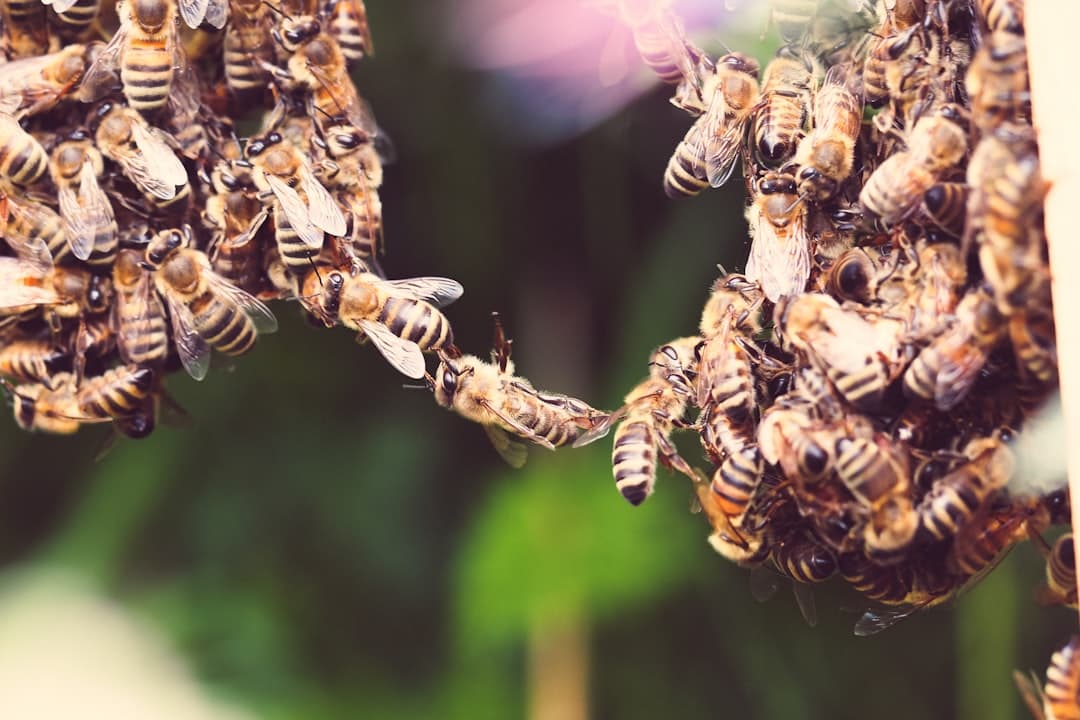
This appendix collects the terms used across the course into one quick-reference page — a glossary lesson like this one can live inside any course, not just as a separate standalone hub, which is exactly what this appendix is here to demonstrate as much as to be useful on its own.
Colony and biology
| Term | Definition |
|---|---|
| Superorganism | A way of describing a honey bee colony as one cooperative unit — queen, workers, and drones — rather than a collection of independent insects. |
| Queen | The colony's sole reproductive female; lays essentially all of its eggs and produces pheromones that regulate colony behavior. |
| Worker | A female bee with undeveloped ovaries under normal conditions; performs nearly every task in the colony other than laying eggs. |
| Drone | A male bee, present mainly in spring and summer, whose only role is mating with a virgin queen from another colony. |
| Brood | Bees in any pre-adult stage — egg, larva, or pupa — collectively. |
| Capped brood | Pupating brood sealed under a wax capping by workers, visually domed and tan-to-brown. |
| Queen cell | A distinctive, elongated, peanut-shaped cell in which a new queen is raised; see swarm cell and supersedure cell below. |
| Swarm cell | A queen cell built along the bottom or lower edge of a frame, typically signaling swarm preparation. |
| Supersedure cell | A queen cell built toward the middle of a frame's comb face, typically signaling the colony is quietly replacing its queen. |
Colony events and management
| Term | Definition |
|---|---|
| Swarm | The natural reproductive event in which an old queen leaves with roughly half the colony's workers to found a new colony elsewhere. |
| Split | A deliberate, beekeeper-managed division of one colony's bees, brood, and stores into two hives, each with its own queen. |
| Supersedure | A colony replacing its own queen (due to age, injury, or poor performance) without swarming. |
| Requeening | Introducing a new queen to a colony, either after supersedure/swarming or as a deliberate management choice. |
| Robbing | Bees from one colony (or wasps) raiding another colony's stores, often when a colony is weak or during a nectar dearth. |
| Deadout | Beekeeping slang for a hive whose colony has died, leaving equipment and sometimes stores behind. |
| Overwintering | The process of a colony surviving winter as a cluster on its stored food reserves. |
| Cluster | The tight ball bees form in cold weather, generating and conserving heat collectively. |
Forage and feeding
| Term | Definition |
|---|---|
| Forage | Nectar, pollen, water, or plant resin (propolis source) that bees collect from the environment. |
| Nectar flow | A period when abundant nectar-producing blooms are available, allowing colonies to build significant surplus stores. |
| Dearth | A period with little available forage, during which colonies may need feeding support to avoid starvation. |
| Sugar syrup | A sugar-and-water mixture fed to bees, typically 1:1 in spring (to mimic nectar and stimulate buildup) or 2:1 in fall (denser, for winter stores). |
| Pollen substitute | A commercial protein supplement fed when natural pollen is scarce, since pollen is the colony's protein source for rearing brood. |
Equipment
| Term | Definition |
|---|---|
| Langstroth hive | The dominant hive design in much of the world, built from stacked boxes of removable, standardized frames spaced with a precise "bee space." |
| Bee space | The roughly 6-9 mm gap Langstroth hives are engineered around — small enough bees won't build comb across it, large enough they won't seal it with propolis. |
| Frame | A thin rectangular structure, usually holding foundation, on which bees draw comb inside a hive box. |
| Foundation | A thin embossed sheet (wax or plastic) that gives bees a hexagonal head start for drawing comb on a frame. |
| Super | A hive box, typically added above the brood nest, intended to hold surplus honey for harvest. |
| Queen excluder | A mesh grid with openings too small for a queen to pass, used to keep her out of honey supers. |
| Smoker | A tool that burns natural fuel to produce smoke, used to calm bees during an inspection by masking alarm pheromone. |
| Hive tool | A flat metal pry bar used to separate propolis-glued boxes and frames and scrape burr comb. |
| Extractor | A centrifugal device that spins uncapped honey frames to remove honey from the comb without destroying its structure. |
Pests, disease, and health
| Term | Definition |
|---|---|
| Varroa destructor | A parasitic mite that feeds on bees and transmits viruses; the most economically significant honey bee pest in most of the world. |
| American foulbrood (AFB) | A bacterial brood disease with extremely persistent spores; typically a reportable concern requiring inspector involvement. |
| European foulbrood (EFB) | A bacterial brood disease generally less severe than AFB, often stress-related, but still a reportable concern in regulated jurisdictions. |
| Integrated pest management (IPM) | An approach combining monitoring, cultural/mechanical controls, and treatment used only when data shows it's needed, rather than a fixed schedule. |
Sources & Further Reading
This glossary's definitions paraphrase and summarize terminology used throughout the FAO's beekeeping guidance and the Wikibooks Beekeeping text, cross-referenced against how each term was introduced earlier in this course.
- FAO. Good Beekeeping Practices for Sustainable Apiculture. 2021. Licensed under CC BY 3.0 IGO. https://www.fao.org/documents/card/en/c/cb4923en
- Wikibooks contributors. Beekeeping. Licensed under CC BY-SA 4.0. https://en.wikibooks.org/wiki/Beekeeping
Harvesting and Enjoying Your Honey
Has llegado al final de este curso