
Lektion 1 av 4
Beekeeping Without a Hard Winter
Why the seasonal calendar from Fundamentals doesn't map cleanly onto tropical and subtropical climates, and what actually replaces winter as the year's defining constraint.
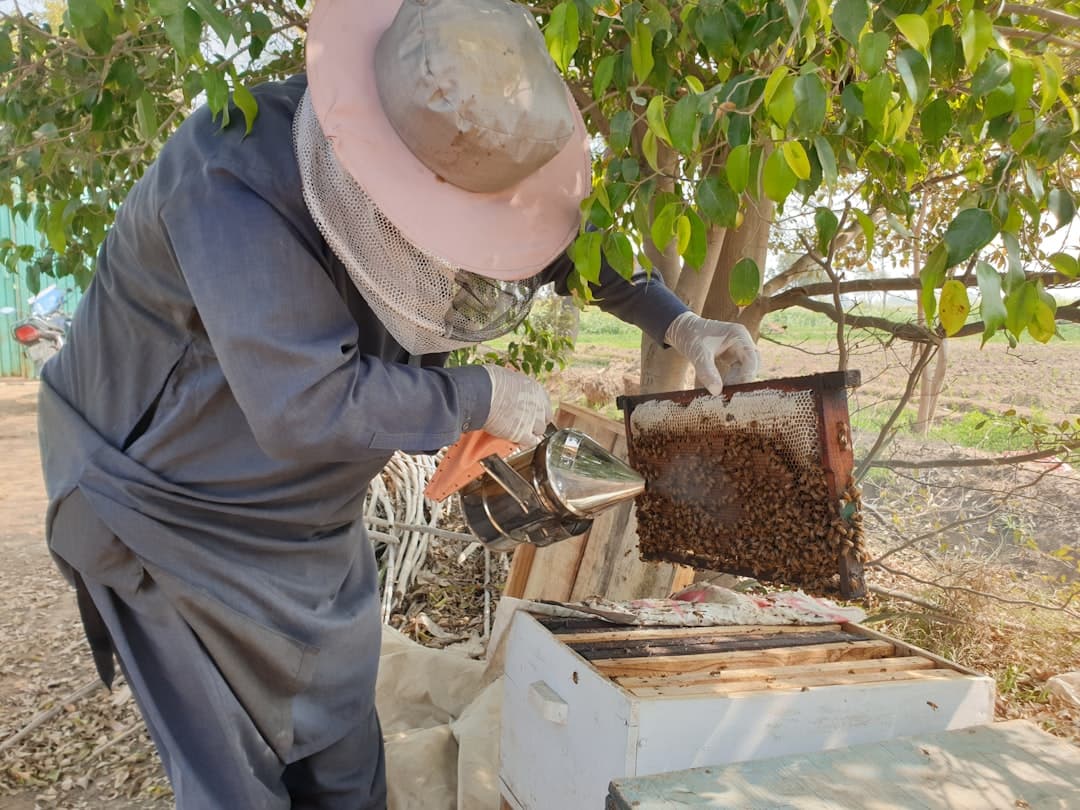
Fundamentals' seasonal-calendar lesson was built around a temperate-climate assumption: one winter, one dormancy period, one annual reset. That assumption simply doesn't hold in tropical and subtropical climates, where colonies may rear brood nearly continuously all year. This lesson isn't about shifting dates on that same calendar — it's about rethinking its underlying structure.
No winter, but not without constraints
A colony in a warm climate doesn't face the specific challenge of surviving months of cold with no forage. But "no winter" doesn't mean "no constraints" — it means the constraints are different, and often follow a different rhythm entirely. Many tropical and subtropical regions have a pronounced dry season, during which reduced rainfall sharply limits blooming forage even though temperatures stay warm. Functionally, a dry-season dearth plays a similar role to the resource-scarcity side of temperate winter: colonies need adequate stores (or feeding support, as covered in Fundamentals) to get through it, even though they're not also managing cold and clustering at the same time.
Continuous brood rearing changes the rhythm of everything
Without a hard winter forcing a pause, brood rearing in many warm climates continues at a fairly steady pace year-round, rather than ramping up in one spring buildup and shutting down for winter. This has knock-on effects across nearly everything else in the seasonal calendar:
- Swarm season isn't concentrated. Since the conditions that drive swarming (a strong, crowded colony with abundant brood and resources) can recur repeatedly through the year rather than building toward one springtime peak, swarm-cell checks need to be part of a year-round inspection rhythm rather than a single seasonal push, as covered in Fundamentals' swarm-prevention lesson.
- There's no natural "reset" for Varroa. Continuous brood rearing means mites have continuous reproduction opportunity too — covered in depth in the next lesson in this course.
- Feeding needs track the dry season, not a calendar month. Rather than "feed in fall to prepare for winter," feeding decisions in a warm climate track actual dry-season timing and severity, which can shift year to year with rainfall patterns.
Rethinking the calendar's structure, not just its dates
The temptation for a beekeeper new to a warm climate is to take the temperate seasonal calendar and simply shift its months to match local weather. That doesn't actually work, because the calendar's underlying logic assumes all of these factors — brood rearing, mite pressure, feeding needs, swarm risk — reset together around one dormancy period. In a warm climate, each of them follows its own more continuous pattern, and inspection planning needs to reflect that directly: rather than a few high-intensity seasonal pushes, a warm-climate beekeeper generally settles into a more consistent, year-round inspection rhythm, adjusted for local dry/wet season timing rather than a spring/summer/fall/winter structure.
Sources & Further Reading
This lesson paraphrases general climate-adapted management guidance from the FAO and Wikibooks.
- FAO. Good Beekeeping Practices for Sustainable Apiculture. 2021. Licensed under CC BY 3.0 IGO. https://www.fao.org/documents/card/en/c/cb4923en
- Wikibooks contributors. Beekeeping. Licensed under CC BY-SA 4.0. https://en.wikibooks.org/wiki/Beekeeping
In many tropical and subtropical climates, what typically replaces winter as the colony's main period of resource scarcity?
Why does swarm season tend to look different in a climate with continuous brood rearing?
Why can't a beekeeper in a warm climate simply reuse a temperate-climate seasonal calendar unmodified?