
Lektion 7 av 11
Feeding and Colony Nutrition
When and why to feed sugar syrup or pollen substitute, the two syrup ratios beekeepers use and why, and when feeding does more harm than good.
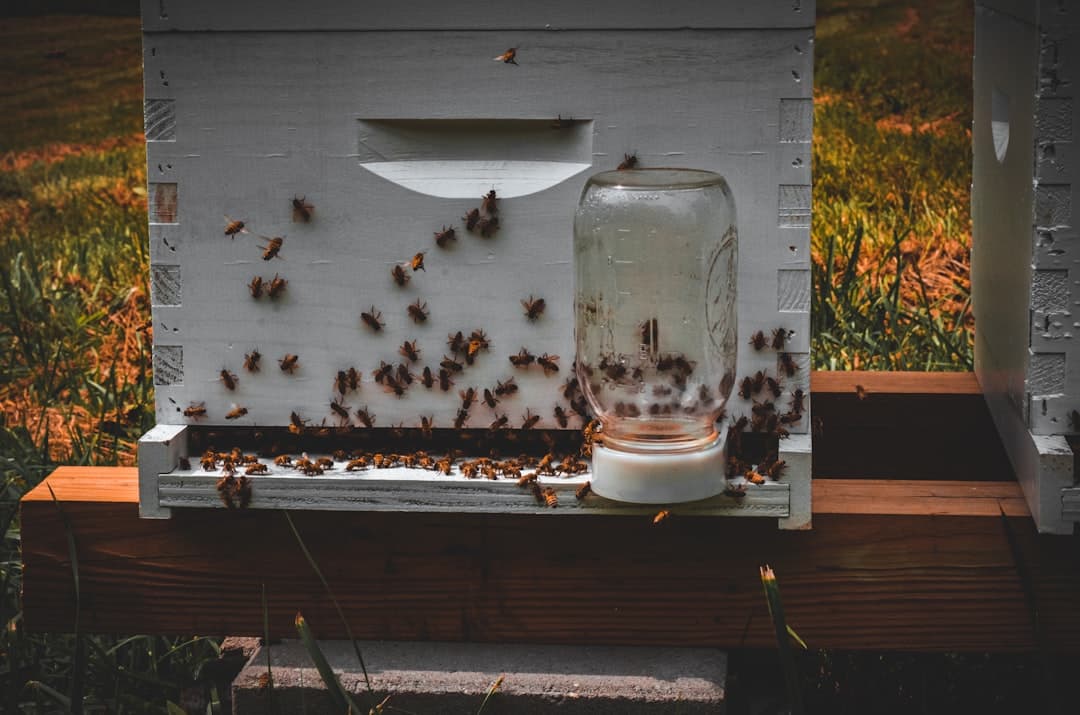
Left alone in good conditions, a colony feeds itself entirely from nectar and pollen it forages. Beekeepers feed supplementally in specific situations — not as a constant routine — to cover gaps the colony can't cover on its own.
Why and when to feed
- New colonies (packages especially) often need feeding support while they draw comb from scratch and haven't yet built up enough foragers to bring in their own surplus.
- Nectar dearth — a stretch of the season with little blooming forage — can leave even established colonies short on incoming food, particularly in mid-summer heat or drought.
- Building toward winter — if a colony's own stores fall short of what it needs to survive winter (see the seasonal-calendar lesson for target weights), fall feeding tops them up before it gets too cold for bees to process syrup.
- Emergency winter feeding — if a colony runs critically low mid-winter, solid feed (fondant or a "candy board") placed directly above the cluster can help, since bees can't reliably take up liquid syrup in cold temperatures.
Sugar syrup ratios
Sugar syrup is simply granulated white sugar dissolved in water, mixed to different ratios depending on the goal:
- 1:1 (by weight or volume) — a thinner mix that resembles the water content of natural nectar. Used in spring, it encourages the colony to behave as if a nectar flow is underway: drawing new comb and expanding brood rearing.
- 2:1 — a thicker, more concentrated mix. Used in fall, it requires less evaporation before bees can cap it as stable stores, which matters when warm days for evaporating excess moisture are running out before winter.
Only plain white granulated sugar should be used — brown sugar, molasses, and other less-refined sweeteners contain compounds bees can't digest well and that can cause dysentery, particularly dangerous in a clustered winter colony that can't take cleansing flights.
Pollen and pollen substitutes
Pollen is the colony's protein source, essential for rearing brood — nectar/sugar syrup covers carbohydrate energy needs, but a colony without adequate pollen struggles to raise healthy brood regardless of how much sugar it has. When natural pollen is scarce — early spring before much is blooming, or during a summer dearth — beekeepers can feed a pollen substitute or supplement patty (commercial products formulated to approximate pollen's nutritional profile) placed directly on top of the brood frames.
When not to feed
Feeding isn't harmless in every context:
- While honey supers are on for harvest, feeding syrup risks it ending up mixed into honey a beekeeper intends to extract and sell — bees store syrup the same way they store nectar, and it isn't practical to separate the two afterward.
- Overfeeding a strong colony during an active nectar flow can needlessly fill brood-nest space with syrup instead of leaving it for the queen to lay in, working against the colony's own growth.
As a general rule, feed to fill a genuine gap — a new colony building up, a dearth, or a fall shortfall — rather than as routine maintenance regardless of the colony's actual needs.
Sources & Further Reading
This lesson paraphrases general feeding and nutrition guidance from the FAO, Wikibooks, and USDA-ARS public-domain material on honey bee biology.
- FAO. Good Beekeeping Practices for Sustainable Apiculture. 2021. Licensed under CC BY 3.0 IGO. https://www.fao.org/documents/card/en/c/cb4923en
- Wikibooks contributors. Beekeeping. Licensed under CC BY-SA 4.0. https://en.wikibooks.org/wiki/Beekeeping
- USDA Agricultural Research Service. Honey Bee Biology. US Government work, public domain. https://www.ars.usda.gov/
Why do beekeepers typically feed a thinner 1:1 sugar syrup in spring rather than a thicker mix?
Why do beekeepers typically switch to a thicker 2:1 syrup in fall?
When should a beekeeper generally avoid feeding syrup?