
Lección 4 de 5
Basic Apiary Economics
Amortizing equipment instead of treating it as a first-year cost, why yield varies year to year, break-even thinking, and the 'free labor' fallacy.
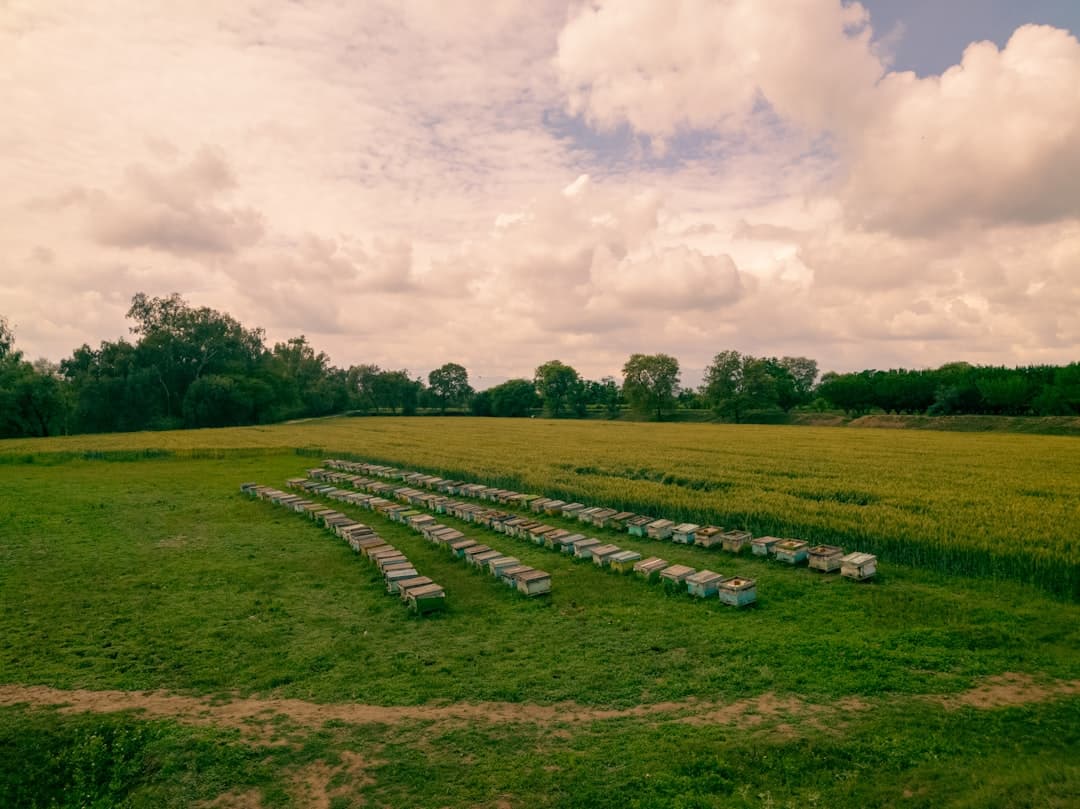
Pricing (the first lesson in this course) only makes sense against an accurate picture of what an apiary actually costs to run. This lesson covers the basic economic thinking that underlies that picture — useful whether you're running a handful of hobby hives or something closer to a small business.
Costs worth accounting for
- Equipment, amortized over its useful life rather than counted entirely in its purchase year — a hive body, extractor, or suit used across many seasons has a much lower true annual cost than its sticker price suggests once spread appropriately.
- Bees and replacement stock — packages, nucs, or requeening costs, including realistic replacement of colonies lost to winter or other causes, not just the cost of starting out.
- Treatments, feed, and protective gear, recurring costs that scale with the number of colonies kept.
- Extraction and processing equipment, whether owned outright, rented, or shared/borrowed within a local beekeeping community.
- Packaging and labeling, covered from the selling side in the pricing lesson but a real per-jar cost worth tracking.
- Your own labor time — the cost most often left out entirely (see below).
The "free labor" fallacy
Because a beekeeper's own hours don't show up as a billed expense, it's easy to implicitly treat that time as costing nothing when evaluating whether an operation is actually profitable, or when deciding how to price honey. In reality, the time spent on inspections, feeding, treatment, harvesting, and processing is a real cost — just an unbilled one. Assigning even a modest hourly value to your own time, and including it when comparing costs against revenue, gives a far more honest picture of whether an operation is genuinely profitable or effectively running at a loss once labor is properly counted.
Yield variability isn't mismanagement
Honey yield varies substantially from year to year based on weather and forage conditions, both largely outside a beekeeper's control — a drought or a poor bloom year can cut yield significantly even with excellent colony management, while a strong flow year can produce well above a typical baseline. Budgeting or pricing decisions built around a single great year's yield will be disappointed by an average or poor one; a more realistic approach budgets around a conservative multi-year average, treating any better year as upside rather than the expected baseline.
Break-even thinking
Understanding at what combination of price and volume an operation actually covers its costs — its break-even point — is useful even for a small hobby operation, since it clarifies whether beekeeping is meaningfully offsetting its own costs, roughly breaking even, or effectively an expensive hobby subsidized by other income (any of which can be a perfectly reasonable choice, as long as it's a deliberate one rather than an assumption). It's also worth knowing that many small and even semi-commercial beekeeping operations run at or near break-even for several years before any real profit emerges, as equipment costs are absorbed and a customer base builds — a realistic expectation to set going in, rather than assuming early profitability.
Sources & Further Reading
This lesson paraphrases general cost-accounting and economic-planning concepts from the FAO and Wikibooks.
- FAO. Good Beekeeping Practices for Sustainable Apiculture. 2021. Licensed under CC BY 3.0 IGO. https://www.fao.org/documents/card/en/c/cb4923en
- Wikibooks contributors. Beekeeping. Licensed under CC BY-SA 4.0. https://en.wikibooks.org/wiki/Beekeeping
Why is amortizing equipment cost over its useful life a more accurate approach than counting it as a first-year expense only?
Why shouldn't a beekeeper budget assuming every year will match a great honey-yield year?
What is the 'free labor' fallacy in apiary economics?