
How to Track Varroa Mite Counts From Your Phone
Stop losing mite counts to a soggy notebook. See how to log an alcohol wash or sugar roll straight from your phone, track infestation trends per hive, and line counts up against treatments with APiLOG.
How to Track Varroa Mite Counts From Your Phone
You just finished an alcohol wash on hive three and counted 14 mites. By the time you've done the same for hives four, five, and six, that first number is buried under sticky notes, a photo you took "just in case," and a half-remembered guess at which jar belonged to which hive. Tracking varroa mite counts from your phone — instead of a paper log or a spreadsheet you fill in later — means the number goes in the moment you count it, attached to the right hive, ready to compare against last month's wash. Here's how to set that up with APiLOG.
Why Track Mite Counts From Your Phone
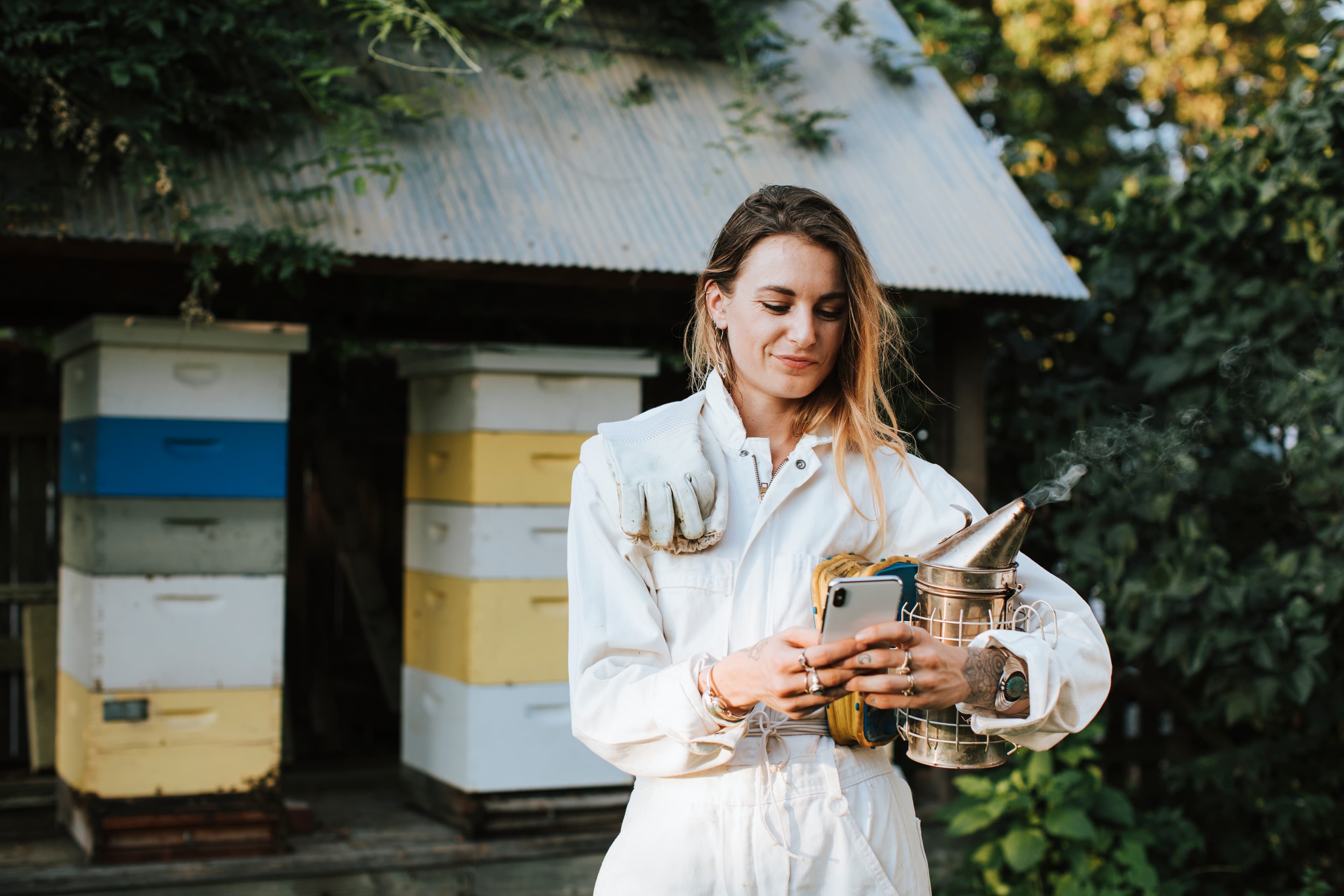
Beekeeper checking a mite count on her phone next to an open hive
A notebook works until you're managing more than a couple of hives. Mite counts are only useful if you can act on them — and that means catching the hive climbing toward threshold before it crashes, not three weeks later when you finally type up your notes.
Logging a count from your phone, right at the hive, closes that gap. You're not transcribing anything later, so there's no step where a number gets copied wrong or a page goes missing. And because the count is attached to that specific hive's record, it sits next to everything else you already know about it — last inspection, last treatment, queen status — instead of living on its own in a separate mite log.
How to Log a Mite Count in APiLOG
- Open the hive you just sampled and start a new record.
- Choose Varroa Mites as the problem type.
- Enter the mite count from your alcohol wash, sugar roll, or sticky board — APiLOG works with whichever method you use.
- If you're tracking a sticky-board drop over several days, mark it as a period and set the start and end dates. APiLOG works out the daily rate for you.
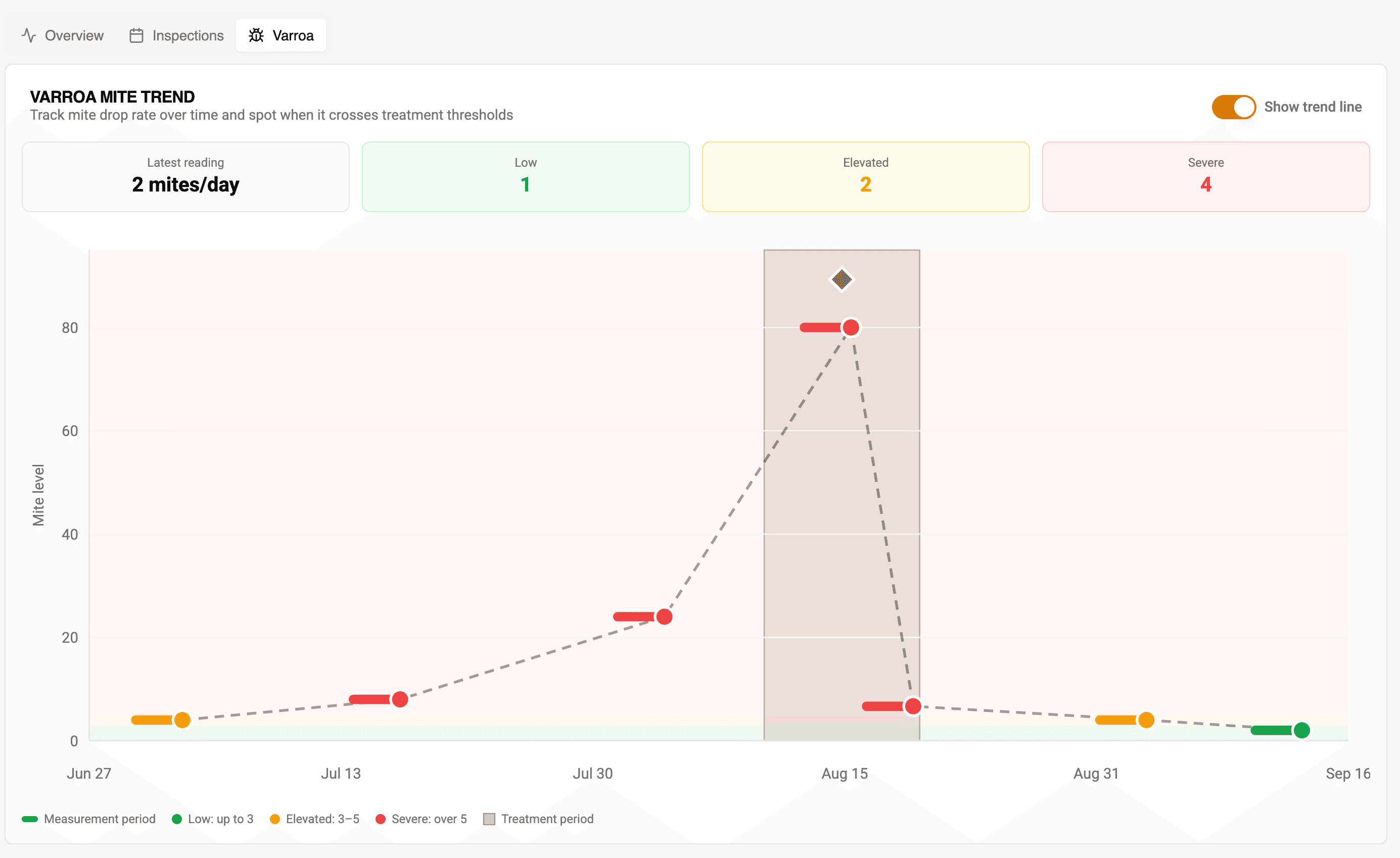
- Save. The count is now plotted on that hive's Varroa tab, color-coded against built-in low, elevated, and severe thresholds so you can see where it stands at a glance.
No separate spreadsheet, no re-entering numbers back at the computer.
See Every Mite Count and Treatment, Right From Your Phone
APiLOG's Varroa tab plots each mite reading against your treatment periods, so a spike, a treatment window, and the drop-off that follows all show up on the same chart — no cross-referencing a separate log to see if a treatment actually worked.
Pick a Counting Method, Then Log It
The app doesn't replace the counting method — you still need to sample your bees. What changes is what happens to the number once you have it. A quick recap of the common methods:
- Alcohol wash — most accurate, bees don't survive the sample.
- Sugar roll — slightly less precise, bees go back in the hive.
- Sticky board — passive, measures natural mite drop over 24–72 hours.
For step-by-step instructions on each method and treatment thresholds by season, see our beekeeper's toolkit mite-counting reference and the full varroa mite treatment guide.
Try Mite Tracking in APiLOG
Log a mite count, attach it to a hive, and see it plotted against treatments — no signup required.
Comparing Mite Trends Across Your Whole Apiary
Once a few counts are logged, the value compounds. Instead of flipping through pages for each hive, you can see which hives are climbing toward threshold and which are holding steady — across the whole apiary, not just the one you happened to check last. That's what turns a single mite count into something you can actually act on: catching the hive that needs treatment before the others.
Frequently Asked Questions
Can I track mite counts on my phone without cell service?
Yes. Enter the count while you're at the hive and it saves to that hive's record as soon as you have a connection again, so you're not stuck typing numbers from memory later.
What mite count counts as "too high"?
It depends on the season — a count that's fine in spring can be a treat-now signal in late summer. See the treatment thresholds by season in our toolkit.
Does APiLOG tell me if a count is too high?
Yes. Each count you log is automatically color-coded — low, elevated, or severe — based on built-in thresholds, so you don't have to look up the numbers yourself every time.
Got Questions?
I'm an email away if you want help setting up mite tracking across your apiary.