
How to Use a Refractometer to Test Honey
Learn how to measure the moisture content of your honey using a refractometer, often confused with a hydrometer.
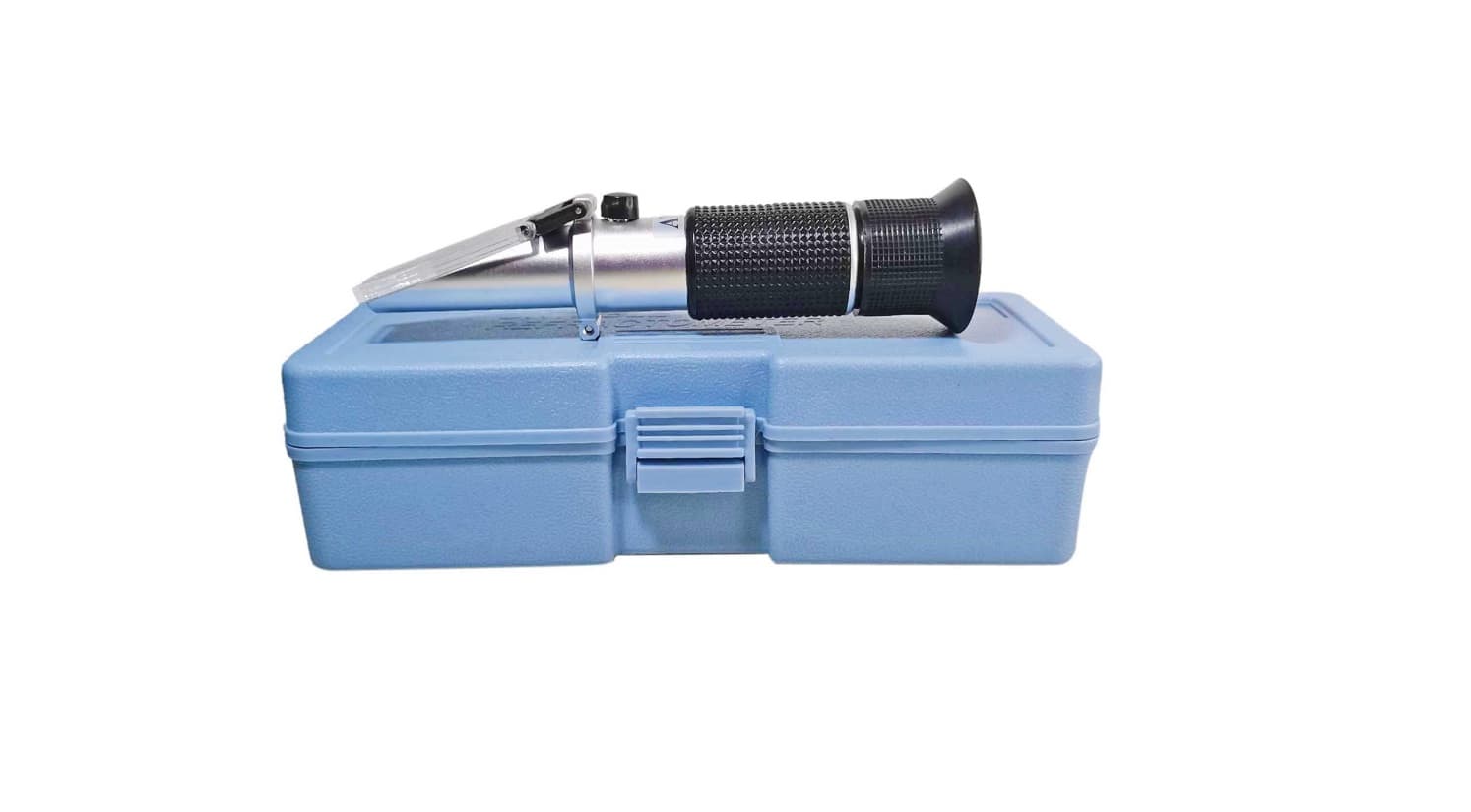
Keeping honey at the right moisture level is crucial for quality and shelf life. Too much water can cause fermentation. Beekeepers often refer to "hydrometers," but a refractometer is the correct tool for testing honey moisture.
Note: A hydrometer is for liquids like wine or beer. For honey, you need a refractometer.
Step-by-Step: Measuring Honey Moisture
1. Calibrate Your Refractometer
Proper calibration ensures your refractometer gives accurate readings. Depending on your model, you may be able to calibrate with distilled water, or you may need to use olive oil if your scale doesn't go low enough.
How to Decide:
- Use distilled water if your refractometer can display
0%on the scale. - Use olive oil if the scale doesn’t reach low readings and
0%isn’t visible.
a. Calibrate with Distilled Water (if possible)
- Place 1–2 drops of distilled water on the prism.
- Close the cover plate gently.
- Look through the eyepiece toward a light source.
- Adjust the calibration screw until it reads
0%. - Wipe the prism clean before measuring honey.
b. Calibrate with Extra Virgin Olive Oil
- Clean the prism surface with a soft, lint-free cloth.
- Place 1–2 drops of olive oil on the prism.
- Gently close the cover plate so the oil spreads evenly.
- Look through the eyepiece toward a light source and note the reading.
- Adjust the calibration screw until the scale shows 27% water (or approximately 71.5-72 Brix).
- Wipe the prism clean and optionally test with a reference sample like honey to confirm accuracy.
Tip: Always calibrate at room temperature, use Extra Virgin Olive Oil and check periodically for consistent readings.
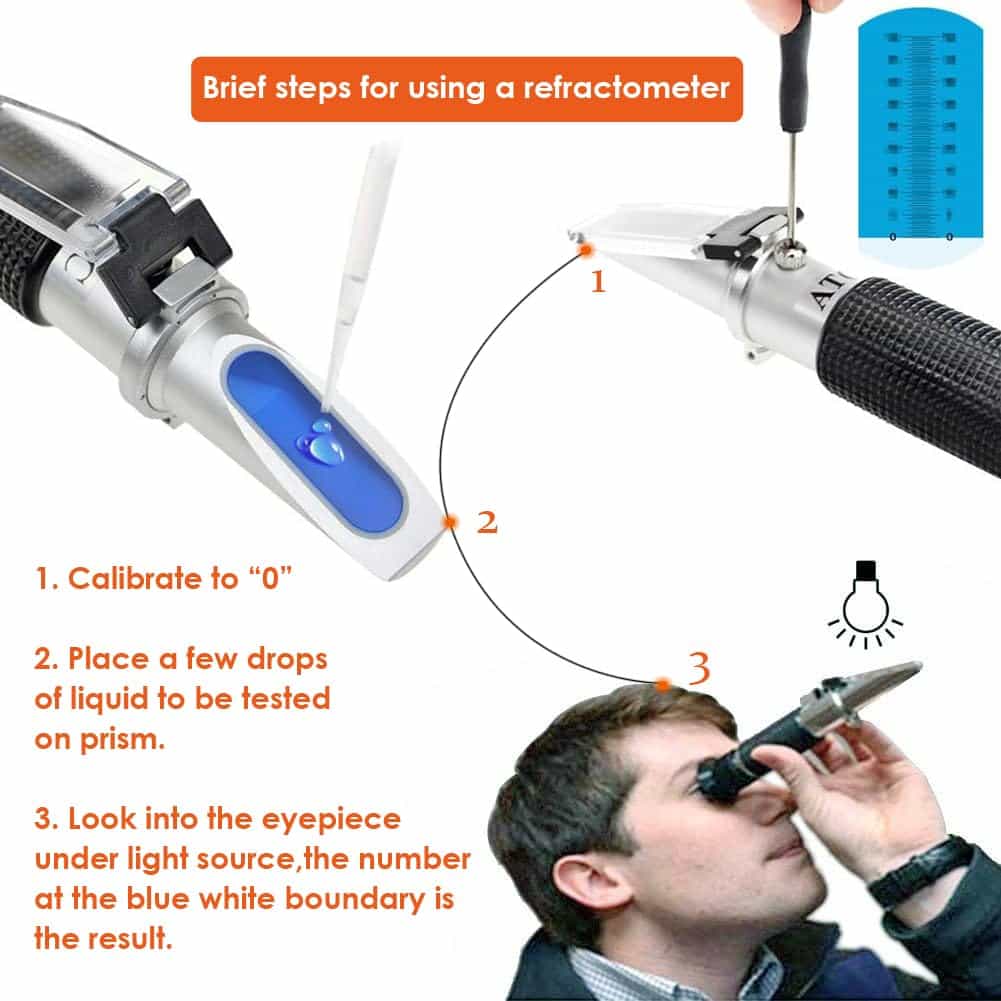
Calibrating a refractometer with water
2. Prepare Your Honey Sample
Ensure your honey is at room temperature (~20°C / 68°F) and well mixed.
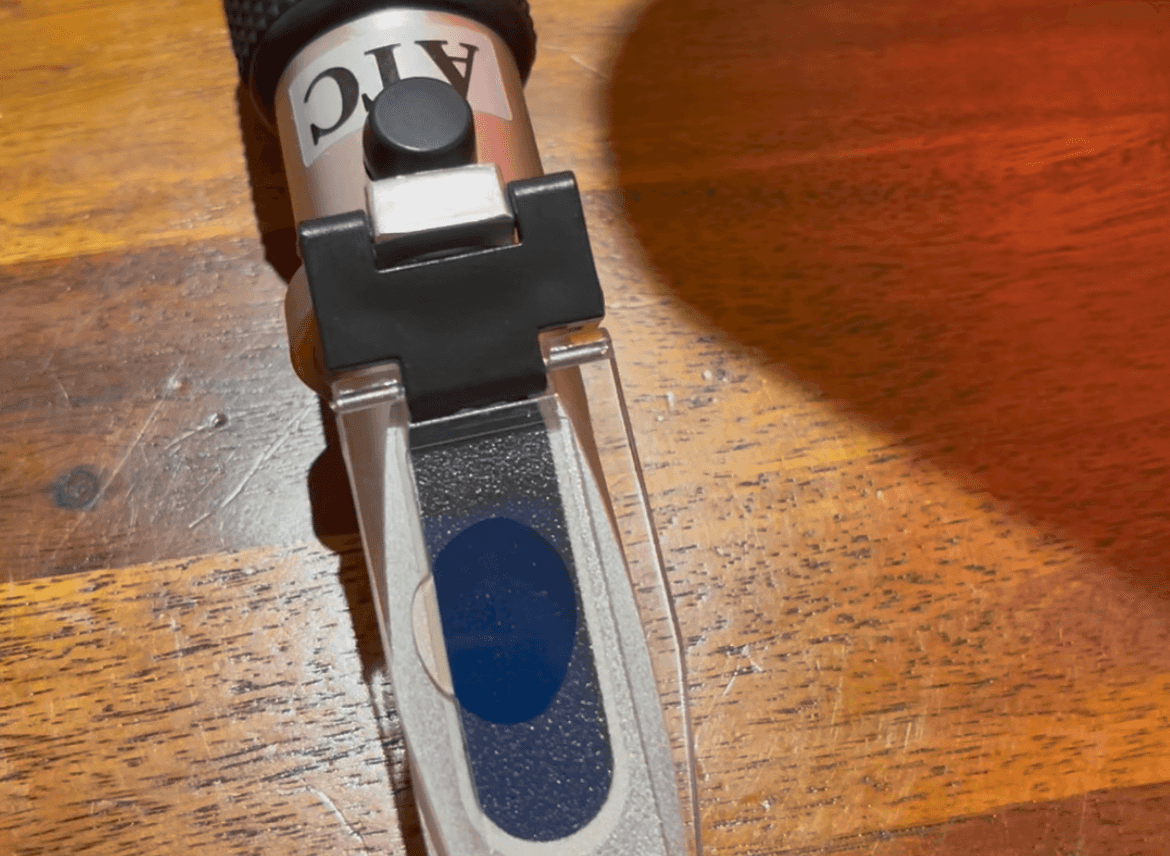
Collecting honey sample
3. Take the Reading
- Place 1–2 drops of honey on the prism.
- Close the cover and look through the eyepiece.
- Read the moisture percentage where the light and dark fields meet.
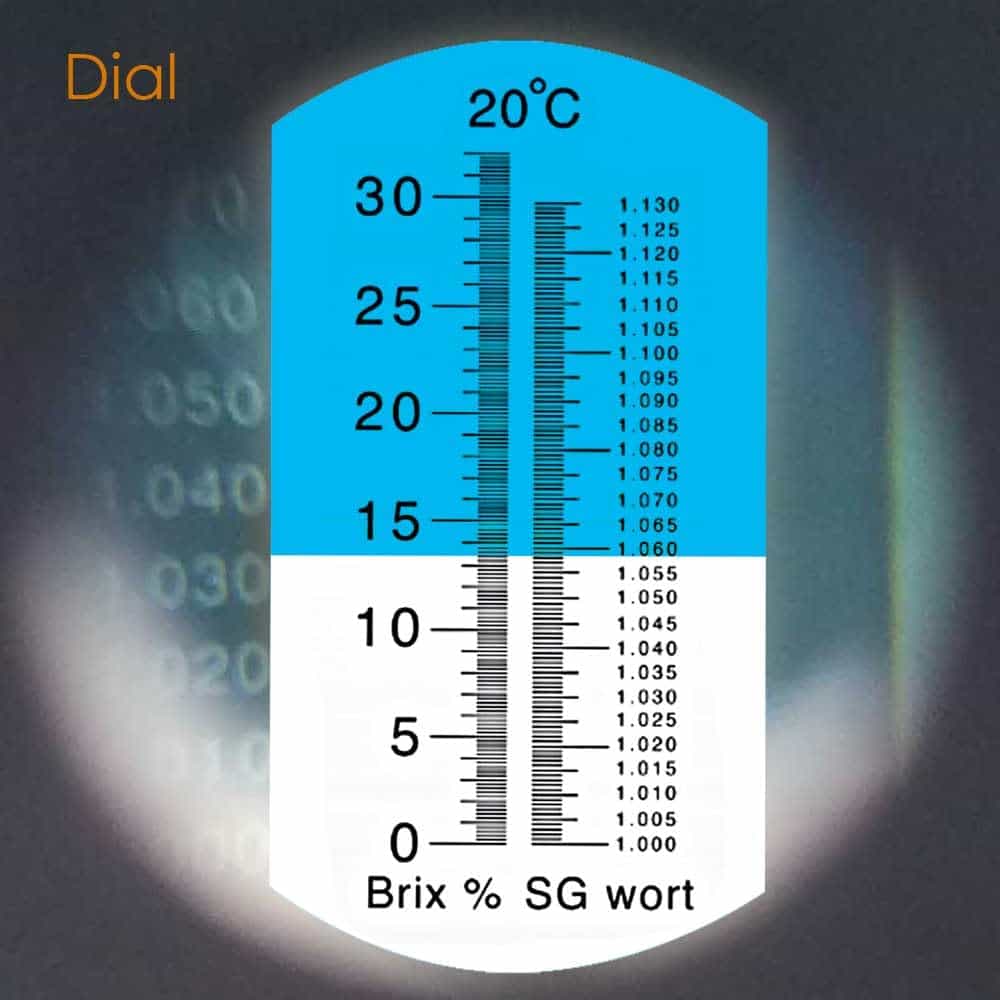
Reading honey moisture on refractometer
✅ Ideal Moisture Ranges
| Moisture % | Quality |
|---|---|
| ≤ 17.8% | Excellent – very stable |
| 17.8–18.6% | Acceptable |
| > 18.6% | Risk of fermentation |
🐝 Pro Tips
- Test a few jars per batch to ensure consistency.
- Clean the refractometer after each test.
- Avoid testing warm honey right after extraction.
Using a refractometer is one of the simplest ways to ensure your honey stays fresh and ferment-free. Interested in getting an affordable refractometer for your toolkit? Happy harvesting!