
beekeeping
queen cells
honeybees
swarming
Understanding Queen Cells in a Beehive
Learn the different types of queen cells, why bees build them, and where to find them on a frame.
APiLOG
2 min read
by Wikimedia Commons
Understanding Queen Cells in a Beehive 🐝
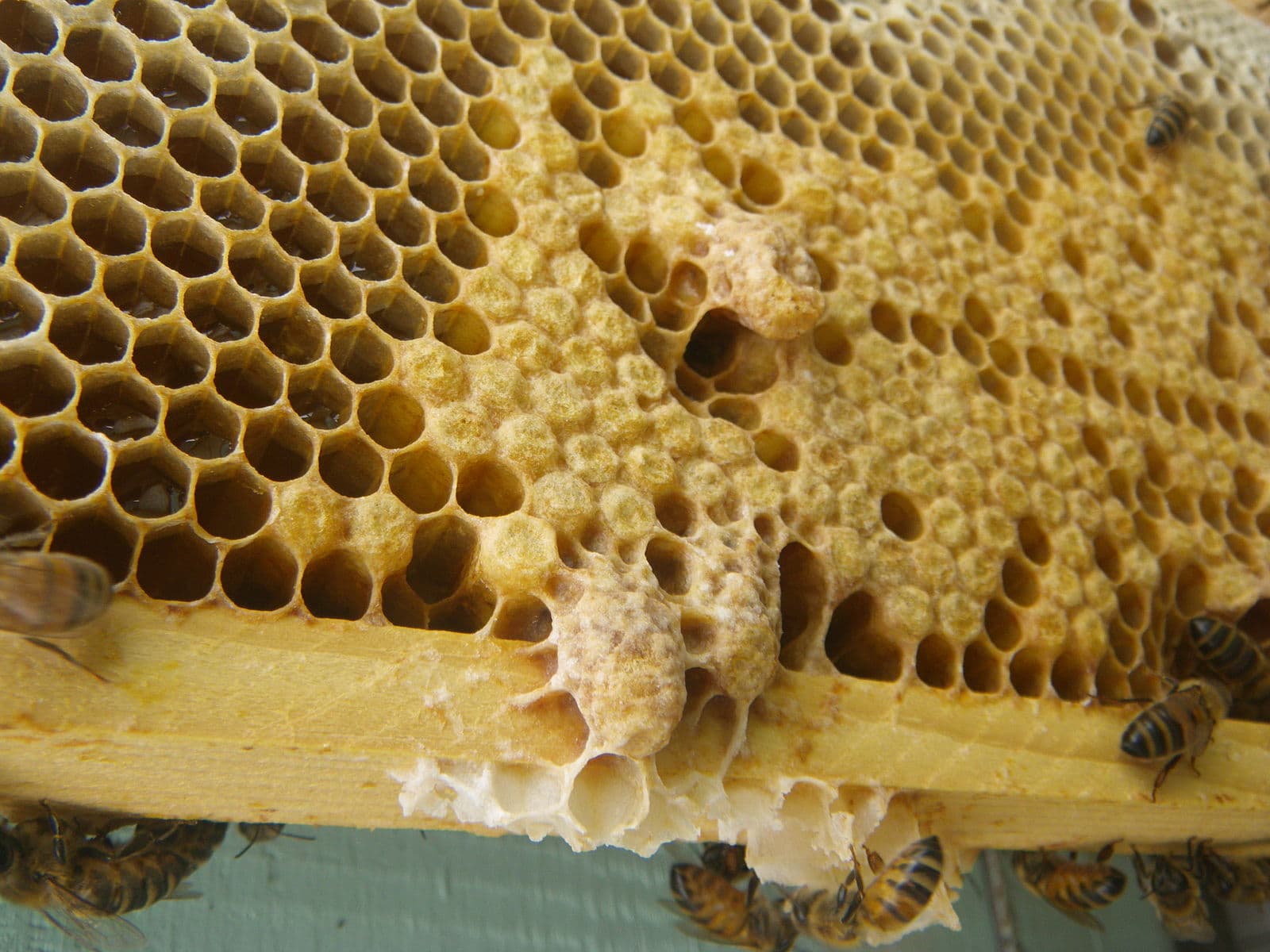
Queen cells are special, peanut-shaped wax structures built by honeybees to raise new queens. They’re much larger than regular brood cells and hang vertically from the comb.
Types of Queen Cells
1. Supersedure Cells
- Purpose: Replaces an aging, injured, or underperforming queen.
- Location: Usually found in the middle of the frame, among the brood area.
- Clue: There may be only 1–3 cells. It's a quiet and natural queen replacement.
2. Swarm Cells
- Purpose: Created when the colony is preparing to swarm (split and reproduce).
- Location: Commonly found along the bottom edges of brood frames.
- Clue: Often multiple (5–20+). Indicates a strong colony ready to swarm.
3. Emergency Cells
- Purpose: Built when the queen suddenly disappears or is killed.
- Location: Scattered in the center or edges of brood frames — converted from existing worker larvae.
- Clue: These cells are often rough-looking and more randomly placed.
Where to Look on the Frame
| Cell Type | Location on Frame | Notes |
|---|---|---|
| Supersedure | Center of brood nest | Fewer, deliberate cells |
| Swarm | Bottom of frames | Multiple, neat & numerous, crowded, extreme bearding |
| Emergency | Anywhere (mostly center) | Irregular shape and placement |
Quick Tips for Beekeepers
- Frequent queen cells on the bottom = Watch for swarming behavior.
- One or two mid-frame queen cells = Colony may be replacing the queen naturally.
- Many scattered cells during queenlessness = Emergency response — verify presence of eggs before intervening.
Want help identifying queen cells during your inspection? 📸 Snap a photo and compare — or ask a local beekeeper for a second opinion!