
Field-Ready Hive Records: Build a System That's Fast Now and Useful Later
Most beekeepers spend more time scribbling notes in the yard than using them later. Learn how to build a beekeeping record system that's quick in the field and clear at the desk with APiLOG.
Field-Ready Hive Records: Build a System That's Fast Now and Useful Later
Most beekeepers spend more time scribbling notes in the yard than using them later. That clutter makes it tough to spot queen issues, track mite counts, or plan honey harvests. Building a beekeeping record system that's quick in the field and clear at the desk changes that—giving you simple, consistent hive records that turn into smart decisions. Keep reading to learn how APiLOG makes this easy from your first inspection to your next big move. For further insights, check out this discussion.
Building a Beekeeping Record System
Creating an effective beekeeping record system is like having a reliable roadmap for your hives. When you simplify record-keeping, you make the entire beekeeping process smoother and more productive. Here's how you can do that.
Simplify Record Keeping
Picture this: you're in your bee yard, and you need to jot down notes quickly. Instead of fumbling with papers, imagine using a system that records your information efficiently. This is where a beekeeping record system becomes invaluable. By simplifying how you document hive details, you not only save time but also ensure you don't miss critical insights. The longer you wait to streamline, the more cluttered and confusing your records become.
Quick and Consistent Notes
Quick, consistent notes are the backbone of any good record system. With tools designed for swift capture, you can record observations in seconds. Using a digital hive log book, you can snap photos or make voice notes on the spot. This means you spend less time writing and more time observing. A system like this keeps you on track, ensuring you don't overlook important changes in your hives.
Turn Notes into Decisions
Once you have your notes, the next step is turning them into actionable decisions. By reviewing organized records, you spot trends, identify problems early, and plan future actions effectively. This approach can transform how you manage your apiary, moving from reactive to proactive. As you develop your system, you realize that well-kept records are not just tedious chores; they're crucial decision-making tools.
Features of a Digital Hive Log Book
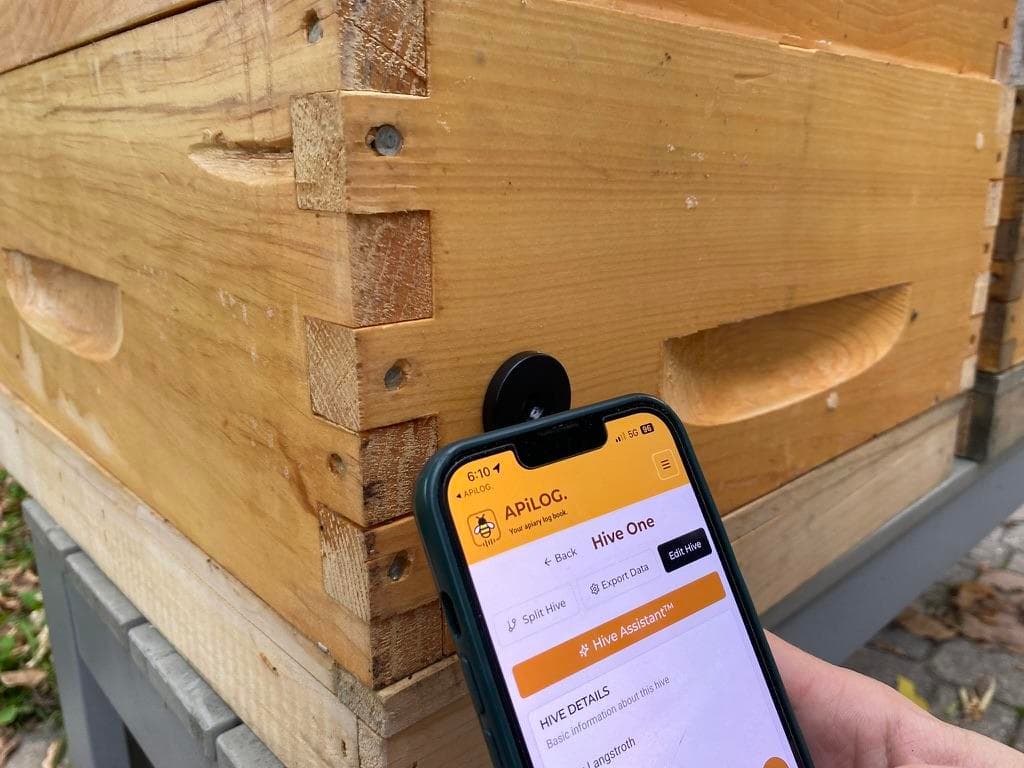
Beekeeper reviewing checklist and photo records on a mobile device during a hive inspection
A digital log book offers features that traditional methods can't match, enhancing your ability to manage hives with precision. Let's dive into some key features that make this tool indispensable for beekeepers.
Hive Inspection Checklist
Imagine having a ready-made checklist for every hive inspection. This feature ensures you cover all bases without forgetting crucial steps. With a hive inspection checklist, you maintain consistency across inspections. By checking off items as you go, you capture every detail that affects hive health. This kind of methodical approach ensures you don't miss signs of issues like mite infestations or queen problems.
Photo Logging Hives
Capturing images during inspections can be a game-changer. By logging photos, you create a visual history of your hives. This is especially useful for urban beekeepers working in tight spaces. With photo logging hives, you can compare past and present conditions at a glance. This feature not only saves time but also enhances your ability to monitor changes over seasons.
Voice Notes Beekeeping
Voice notes provide a hands-free way to document your findings. By speaking your observations, you can capture detailed information quickly. This feature is perfect for capturing real-time insights during hive inspections. Voice notes beekeeping allows you to focus on the bees while recording what you see. This method ensures you don't miss important details, making your records more comprehensive and useful.
See It In Action
Try APiLOG's field-ready record keeping yourself. Snap photos, record voice notes, and experience the future of hive management—no signup required.
Maximizing APiLOG for Beekeepers
APiLOG offers tools that take your beekeeping records to the next level. By leveraging these features, you optimize hive management, leading to healthier colonies and better yields.
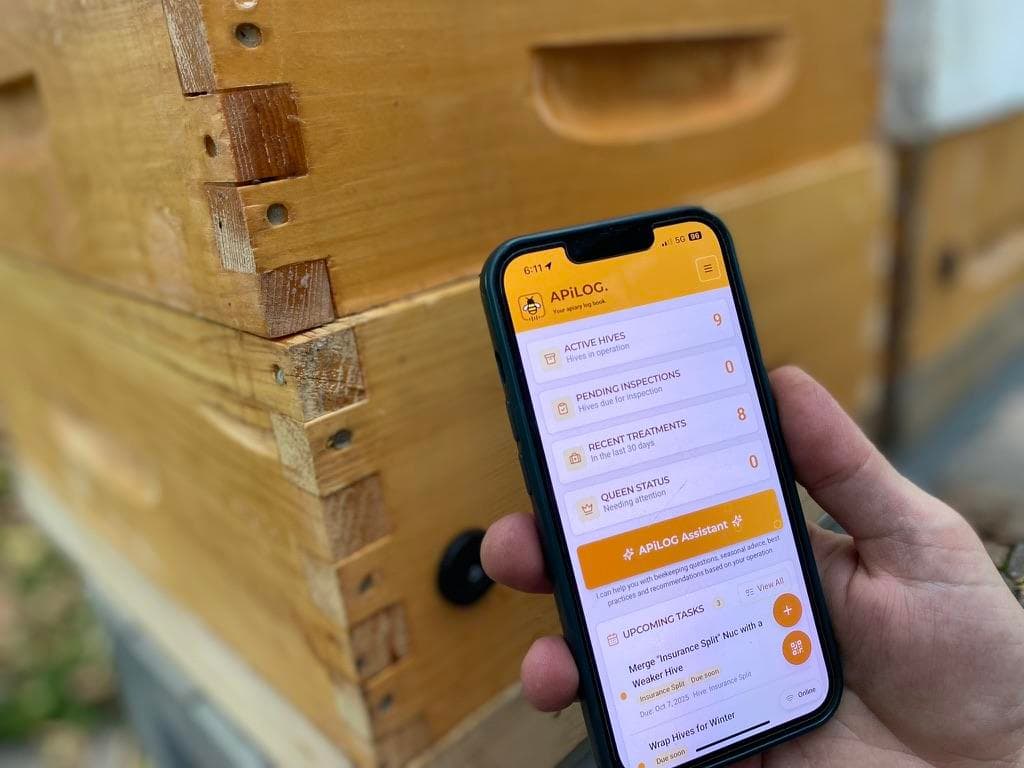
Queen Status Tracking
Tracking the queen's status is crucial for maintaining a thriving hive. APiLOG helps you monitor queen health with ease. By recording details like brood patterns and queen age, you get a clear picture of her performance. This queen status tracking ensures you can make informed decisions, such as when to replace a failing queen.
Mite Count Records
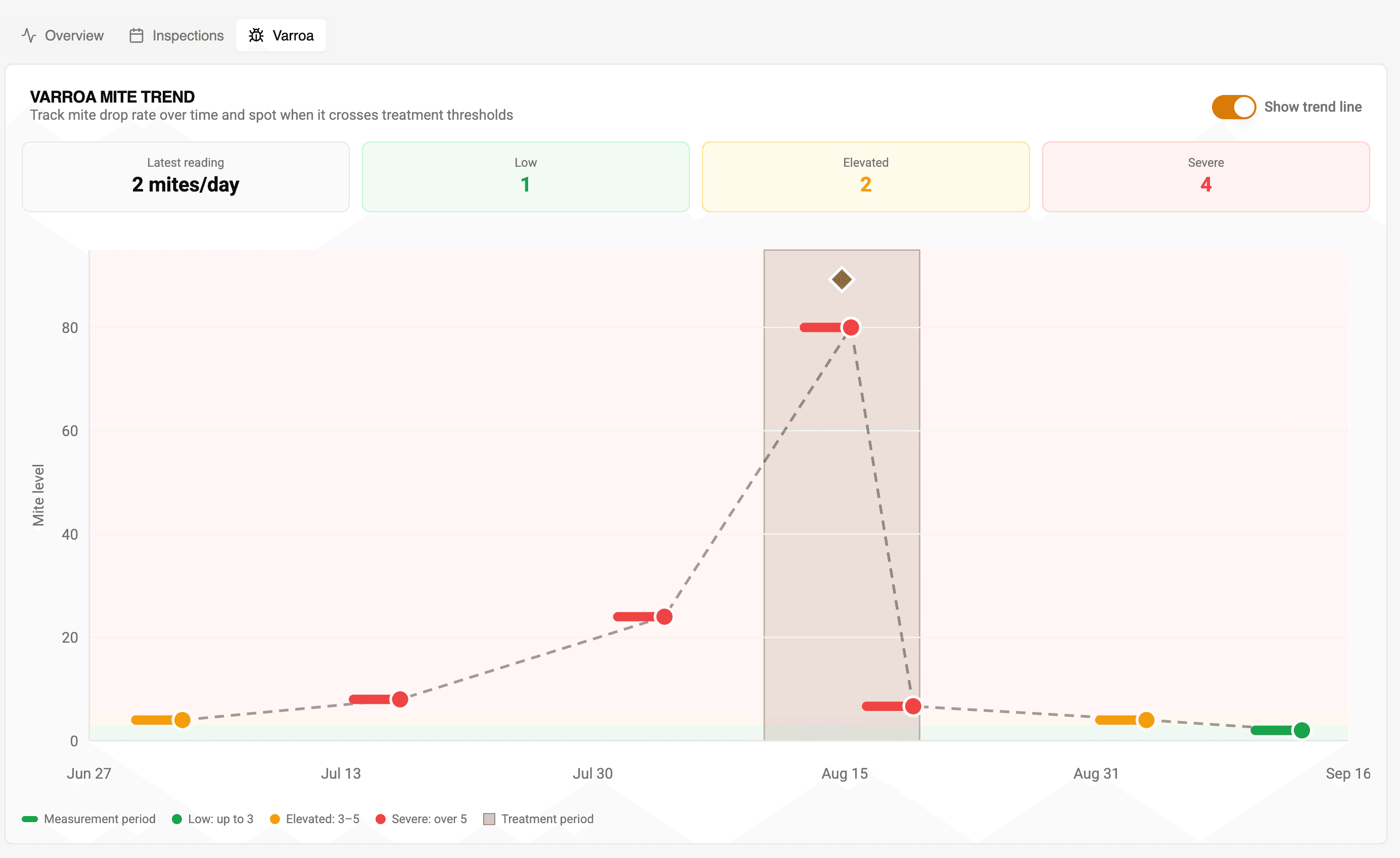
Mites are a persistent threat to bee health. Keeping accurate mite count records helps you manage them effectively. With APiLOG, you can log and review mite counts easily, identifying trends and determining the best treatment times. Consistent mite count records provide insights that can save your hives from potential infestations.
Track Your Mite Counts and Treatments on One Timeline
APiLOG's Varroa tab plots each mite reading against your treatment periods, so a spike, a treatment window, and the drop-off that follows all show up on the same chart — no cross-referencing a separate log to see if a treatment actually worked.
Beekeeping Data Analytics
Data analytics take your beekeeping to the next level by turning raw data into actionable insights. APiLOG's analytics feature helps you spot patterns and make predictions about hive health. By analyzing data over time, you make more informed decisions that improve colony productivity. Embrace beekeeping data analytics to unlock the full potential of your apiary.
Frequently Asked Questions
How can I start using a digital hive log book?
Begin by downloading a beekeeping app like APiLOG. Set up your hives in the app, and start using features like photo logging and voice notes to capture data during inspections. This transition from paper to digital will streamline your record-keeping process.
What should I track during hive inspections?
During inspections, focus on recording queen health, brood patterns, mite counts, and any signs of disease. A detailed log helps you track hive health over time and make better management decisions.
Why is data analytics important in beekeeping?
Data analytics allows you to identify patterns and predict hive health issues before they become serious. By analyzing trends, you can optimize hive management, leading to healthier bees and increased honey production.
Got Questions?
I'm an email away from any questions or help you might need setting up your field-ready record-keeping workflow.