
Lektion 5 von 6
Overwintering Strategy In Depth
Why moisture, not just cold, is the real threat to a wintering colony, how to size up a colony's chances going into winter, and how to read a deadout afterward.
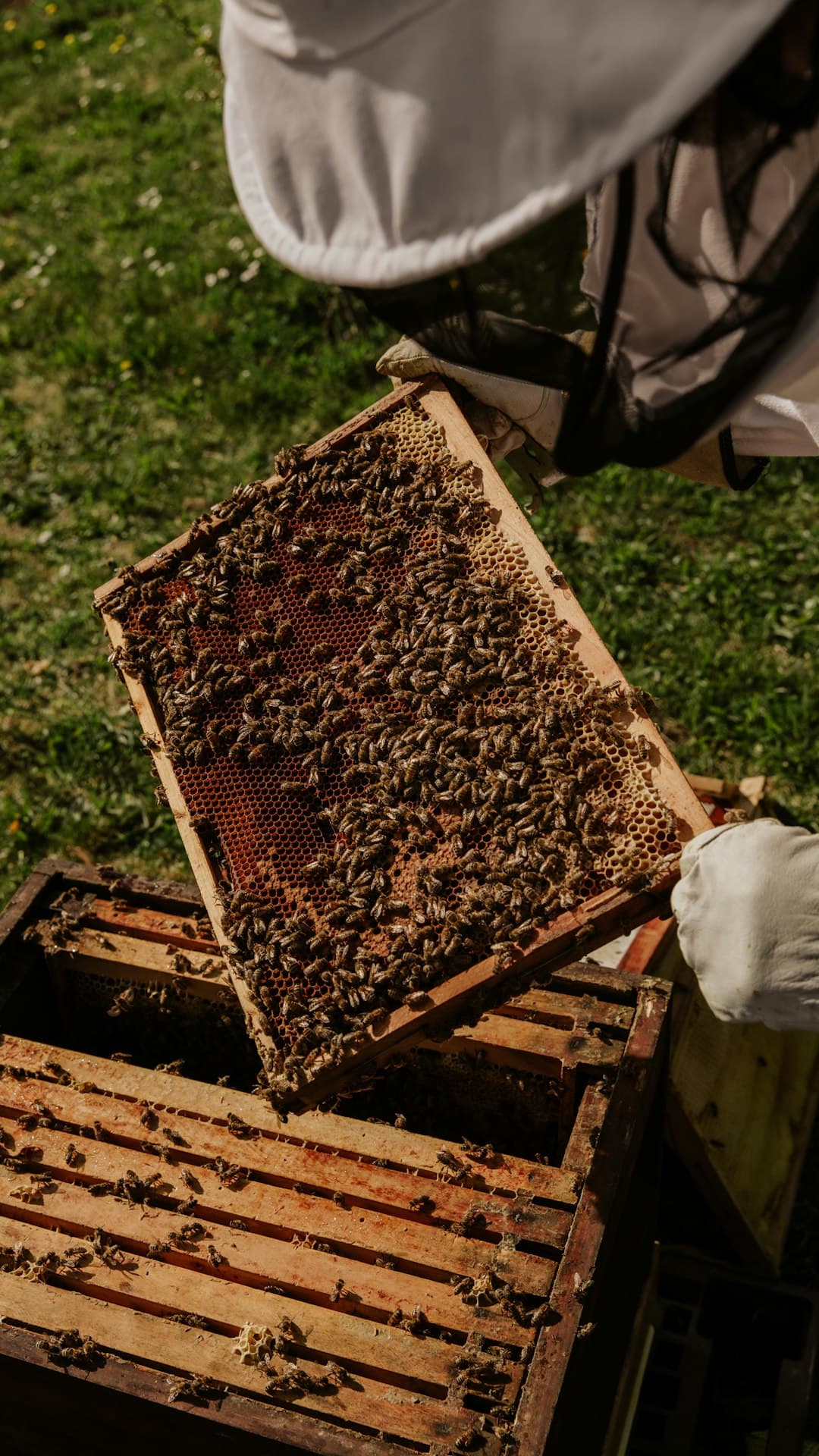
Fundamentals covered the winter cluster's basic biology and the stores-weight targets a colony needs. This lesson goes further into what actually kills colonies over winter — usually not cold by itself — and how to read what happened afterward.
Moisture, not just cold
A well-clustered honey bee colony tolerates real cold reasonably well; bees generate heat by vibrating flight muscles and rotate positions within the cluster so no individual bee stays on the cold outer edge too long. The bigger threat is moisture: the cluster's own metabolic activity produces warm, humid air, which rises and can condense into liquid water on a cold inner cover or hive walls above it — and that condensation can drip directly back down onto the cluster. A cluster that could have handled dry cold indefinitely often cannot handle being directly wetted, since a wet cluster loses heat far faster than a dry one. This is why winter hive setups generally prioritize managing moisture (upper entrance or ventilation gap, absorbent quilts or boards above the cluster) at least as much as raw insulation.
Insulation and wind protection
Alongside moisture management, reducing a hive's overall heat loss helps a cluster expend less energy staying warm — energy that would otherwise need to come from stores. Common approaches include wrapping hives in insulating material (foam board, purpose-made hive wraps, or tar paper in some regions) and siting an apiary with windbreaks, as covered in the first-bees lesson from Fundamentals, since wind chill on an exposed hive meaningfully increases heat loss compared to a sheltered one. In particularly severe climates, some larger operations move colonies into climate-controlled indoor storage for the coldest months entirely, though this is more common at a commercial scale than for a hobbyist apiary.
Assessing a colony's odds before winter sets in
Beyond the stores-weight targets from Fundamentals, population matters just as much: a commonly cited cold-climate benchmark is roughly 7-8 frames of bees for a full-sized colony's chances of coming through a cold winter, since a cluster below a critical size struggles to generate and retain enough heat regardless of how much honey it has. A fall inspection that finds a colony light on both bees and stores is a candidate for combining with a stronger colony (if timed early enough) rather than betting on it surviving alone.
Reading a deadout
When a colony doesn't make it, the pattern left behind usually points to a cause, even without lab testing:
- Starvation — a small cluster found dead with bees head-first, deep in otherwise-empty cells, often close to (but not touching) other frames that still have capped honey. This is frequently isolation starvation: the cluster was too cold or too small to move even a short distance to reach nearby stores, and starved within reach of food. It's a strong signal that stores were adequate in total but poorly positioned relative to where the cluster ended up.
- A genuinely inadequate final population or stores going into winter, discovered too late to correct — a reminder to weigh and assess colonies during the fall preparation window covered in Fundamentals, not just at the first spring inspection.
- Signs pointing to disease or a mite crash rather than simple cold-weather attrition — a much smaller cluster than expected relative to remaining stores, or visible signs consistent with the pest and disease topics from Fundamentals and the advanced Varroa lesson earlier in this course, is worth investigating rather than assuming winter alone was the cause.
Treating every deadout as a brief diagnostic exercise — rather than just cleaning up and moving on — is one of the more valuable habits an intermediate beekeeper can build, since the same preventable mistake often repeats across multiple colonies or multiple winters if the actual cause is never identified.
One concrete example, not a global standard: some regions offer financial support for colony losses, including winter deadouts. In the United States, the Livestock Forage Disaster Program's Emergency Assistance for Livestock, Honey Bees, and Farm-Raised Fish Program (ELAP) can cover a share of the cost of hive losses for eligible beekeepers, provided losses are documented and claims filed within the program's deadlines. Treat this as a sense of the kind of support that may exist, not a guarantee — check your own country's, state's, or province's agriculture department for what (if anything) applies to you, and keep the kind of dated loss records covered in the recordkeeping course, since most programs require documentation you can't easily reconstruct after the fact.
Sources & Further Reading
This lesson paraphrases general overwintering guidance from the FAO and Wikibooks, and Ontario-specific overwintering benchmarks — verified directly from the source page — from OMAFRA, reproduced under the Open Government Licence – Ontario, which permits adaptation with attribution.
- FAO. Good Beekeeping Practices for Sustainable Apiculture. 2021. Licensed under CC BY 3.0 IGO. https://www.fao.org/documents/card/en/c/cb4923en
- Wikibooks contributors. Beekeeping. Licensed under CC BY-SA 4.0. https://en.wikibooks.org/wiki/Beekeeping
- Government of Ontario / OMAFRA. Best Management and Biosecurity Practices for Beekeeping in Ontario. Licensed under the Open Government Licence – Ontario. https://www.ontario.ca/page/best-management-and-biosecurity-practices-beekeeping-ontario
Why is moisture management often considered more critical to winter survival than cold temperature alone?
Roughly how many frames of bees is commonly used as a benchmark population for a full-sized colony heading into a cold winter?
When examining a deadout colony, what does finding many dead bees head-first deep inside empty cells typically indicate?