
Beekeeping Record Keeping Guide: How to Track Your Hives Effectively
Learn why hive record keeping is essential for new and experienced beekeepers, what to track during inspections, and how digital tools like ApiLog make beekeeping easier and more organized.
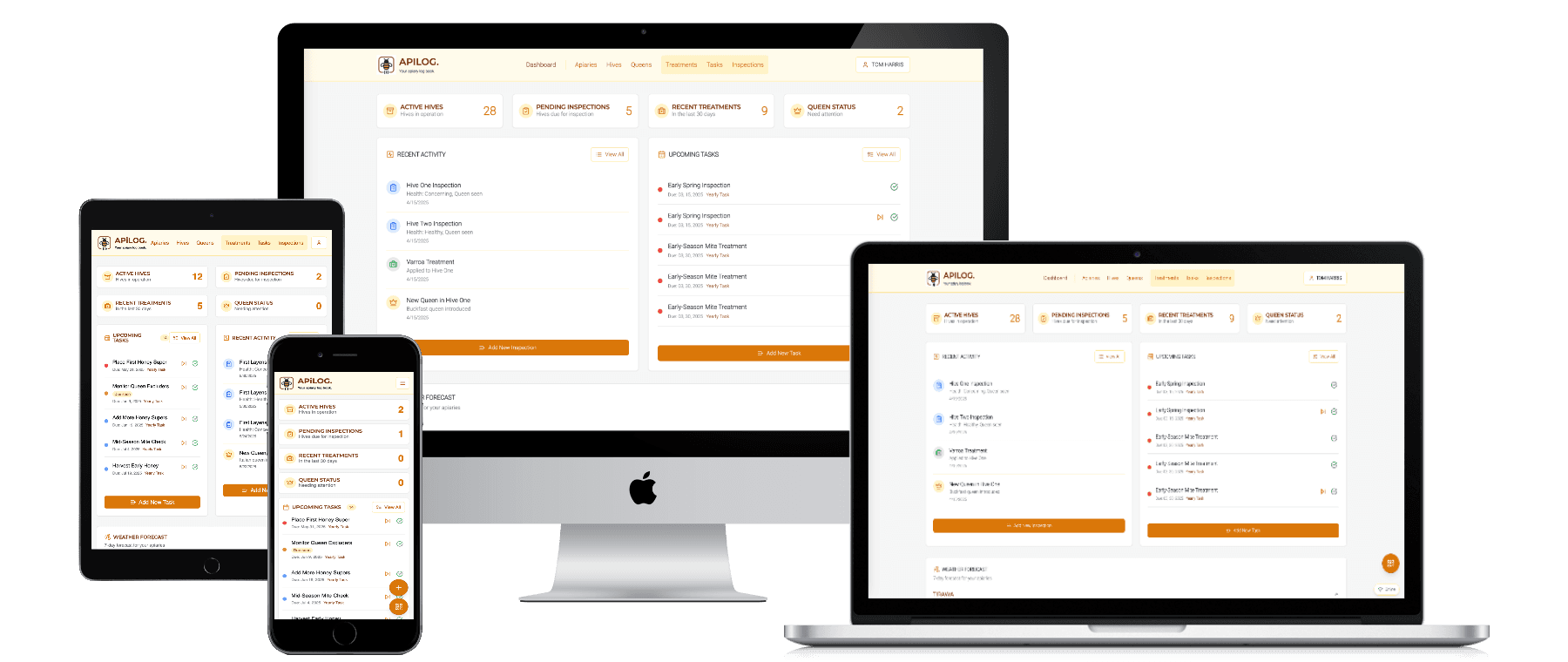
Beekeeping Record Keeping Guide: How to Track Your Hives Effectively
If you ask any experienced beekeeper about their biggest lessons learned, you’ll likely hear: “I wish I started keeping better records sooner.”
Hive record keeping for your apiary isn’t just a chore — it’s the backbone of confident beekeeping. For beginners, it’s the difference between guessing and knowing. For seasoned beekeepers, it provides historical insights that help prevent losses, improve honey yields, and track queen performance year after year.
And while notebooks and spreadsheets have long been the go-to tools, digital hive tracking with apps like ApiLog is quickly becoming the new standard.
Why BeeHive Record Keeping Matters
Imagine opening your hive in early spring and noticing fewer bees than last season. Without records, it’s a mystery. With records, you’ll know:
- Was the queen replaced last year?
- How strong was brood production before winter?
- Did mite counts peak in the fall?
- What treatment did I use and when?
This context turns confusion into clarity — helping you make better decisions for your colonies. In some regions, regulatory bodies ask to see hive records and possible treatment schedules. With digital hive tracking app, access to this information is easily retrievable and accurate.
Beekeeping Record Keeping: What to Track in Hive Inspections
Whether you’re a beginner with one hive or managing dozens, here’s what to include in your hive inspection log:
- Queen & colony info (age, marking, origin, replacements)
- Inspection details (date, weather, temperature, humidity)
- Brood counts & patterns (eggs, larvae, capped brood—indicators of queen health)
- Hive behavior (agitation, aggressiveness, calmness)
- Pest & disease treatments (timing, product, response)
- Equipment logs (suppliers, hive type, costs, movement)
- Media support (audio transcripts for later review)
These logs make your apiary more predictable, trackable, and teachable.
How Often Should Beekeepers Record Hive Inspections?
- New beekeepers: inspect and log weekly during the first season.
- Spring: every 7–10 days when colonies grow quickly.
- Summer: every 2 weeks, unless issues arise.
- Fall: every 2–3 weeks, preparing for winter.
- Winter: minimal checks (weight, ventilation, deadouts).
Consistent hive logs prevent surprises and let you spot patterns across seasons. I do want to stress though that the longer you can leave your bees alone the better and less stressed they will feel. So adequate not taking when you are in the hive, might allow you to prolong the next inspection.
Why ApiLog Elevates Your Record-Keeping
ApiLog combines the best of traditional jounaling methods with modern ease:
- Fast, intuitive data capture on mobile or desktop
- Task and inspection reminders let you know what needs attention
- Structured fields for queen info, brood, treatments, and more
- Automatic trend tracking & charts—see changes over time
- AI assistant to guide your beekeeping based on history
- Searchable history to quickly review past inspections
- Easy access, sharing & exporting — including ELAP compliant exports for mentors, clubs, or regulatory compliance
ApiLog turns “record keeping” into hive intelligence.
"Having the ability to just talk about what you're seeing—the brood pattern, the amount of honey, any pests—and have that data automatically structured and analyzed is a huge leap forward from manual entry. The AI-generated suggestions are a fantastic way to get a "second opinion" and learn as you go, which is invaluable for a new beekeeper."
🎥 Video: See ApiLog in Action
ApiLog for Beginners vs. Experienced Beekeepers
For Beginners
- Step-by-step inspection templates build good habits.
- Helps you learn faster by showing cause-and-effect.
- Peace of mind knowing you’re not missing key details.
For Experienced Beekeepers
- Compare multiple colonies over seasons.
- Track queen performance and treatment ROI.
- Build a long-term apiary history — your legacy.
Getting Started
- Sign up for ApiLog.
- Add your hives with queen and colony details.
- Use inspection Voice data to log weather, brood, and hive status.
- Hive Assitant™ is there to guide and answer you through potential problems as a new beekeeper or to get another opinion as a seasoned keeper.
- Review trends and export reports — ELAP compliant — for your own insights or to share with others.
Beekeeping Record Keeping FAQ
Q: Why is beekeeping record keeping important for beginners?
A: It helps you spot problems early, track progress, and avoid costly mistakes.
Q: What’s the best way to keep hive records?
A: You can use a notebook, spreadsheet, or a digital app like ApiLog. Digital record keeping saves time and reveals trends.
Q: Do I need to log every inspection?
A: Yes — consistency is key. Even short notes build valuable hive history.
Q: Can ApiLog replace my paper hive log?
A: Yes. ApiLog is designed to capture everything you’d normally write down, but with search, charts, and media attachments.
Final Thoughts
Switching from pen-and-paper or spreadsheets to ApiLog transforms hive record-keeping—from a chore into a powerful insight engine. Whether you're just starting or deeply seasoned, ApiLog helps turn data into smarter, more responsive beekeeping.
With ApiLog, beekeeping record keeping becomes smarter, easier, and more rewarding.
Start smarter. Log smarter. Keep bees thriving with ApiLog.