
To Flow or Not to Flow: My Personal Journey With the Flow Hive
I’ve used the Flow Hive since 2016 — here’s what worked, what didn’t, and where I think it fits in modern beekeeping.
🍯 To Flow or Not to Flow
My Personal Journey With the Flow Hive
I bought a Flow Hive back in 2016, when it first made waves on Indiegogo with its revolutionary honey-on-tap design. Like many people, I was instantly intrigued — but it sat in my garage for nearly a year. Why?
Because I realized pretty quickly that beekeeping isn’t just about the honey — it’s about caring for living creatures.
The First Year: Lessons in Expectations
Once I felt ready, I found someone to populate the hive and mentor me. That’s when I started learning the real truth: the Flow Hive isn’t a shortcut to beekeeping — it’s a different take on honey extraction.
Beekeeping is not just "honey on tap." It’s still about care, management, and understanding your bees.
The people who helped me in the first year treated it like a traditional hive — which, for the brood chamber, was fine. But when it came to the Flow Frames, things fell apart.
They didn’t consider nectar type. Unfortunately, the bees had been foraging near canola fields — a nectar source that crystallizes quickly. When the time came to extract, they couldn’t. The honey had solidified inside the frames. They were quick to say “I would never use it again, it all crystalized inside and we couldn't extract it.”
Needless to say, I was disappointed. But I wasn’t done with the Flow Hive yet.
Trying Again — With Better Conditions
The next season, I followed my mentor more closely. This time, I set the hive up on a 40-acre property surrounded by wildflowers, pastures, and bush — a perfect mix for a more diverse nectar flow.
When the first real nectar flow hit, I was amazed. The bees filled the Flow Frames evenly, the capping was nearly 100% completed, so... I decided to tap a frame! Disclaimer: If you are selling or even giving honey to others, please be sure to test the honey with a refractometer. A refractometer a very simple tool to use to make sure the honey is cured and ready/safe to "store". Capped cells is NOT a sure shot that the honey is < 18% moisture.
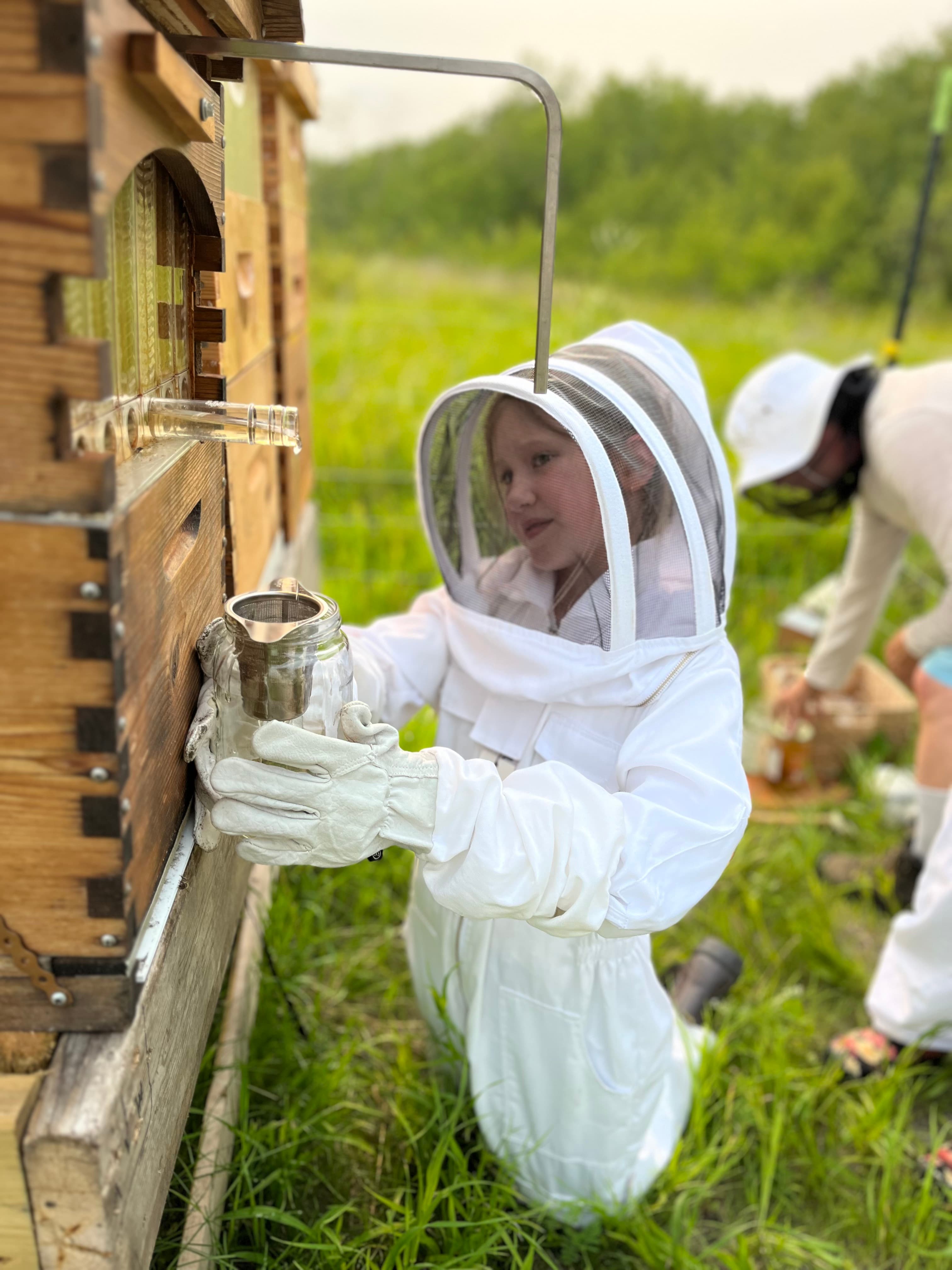
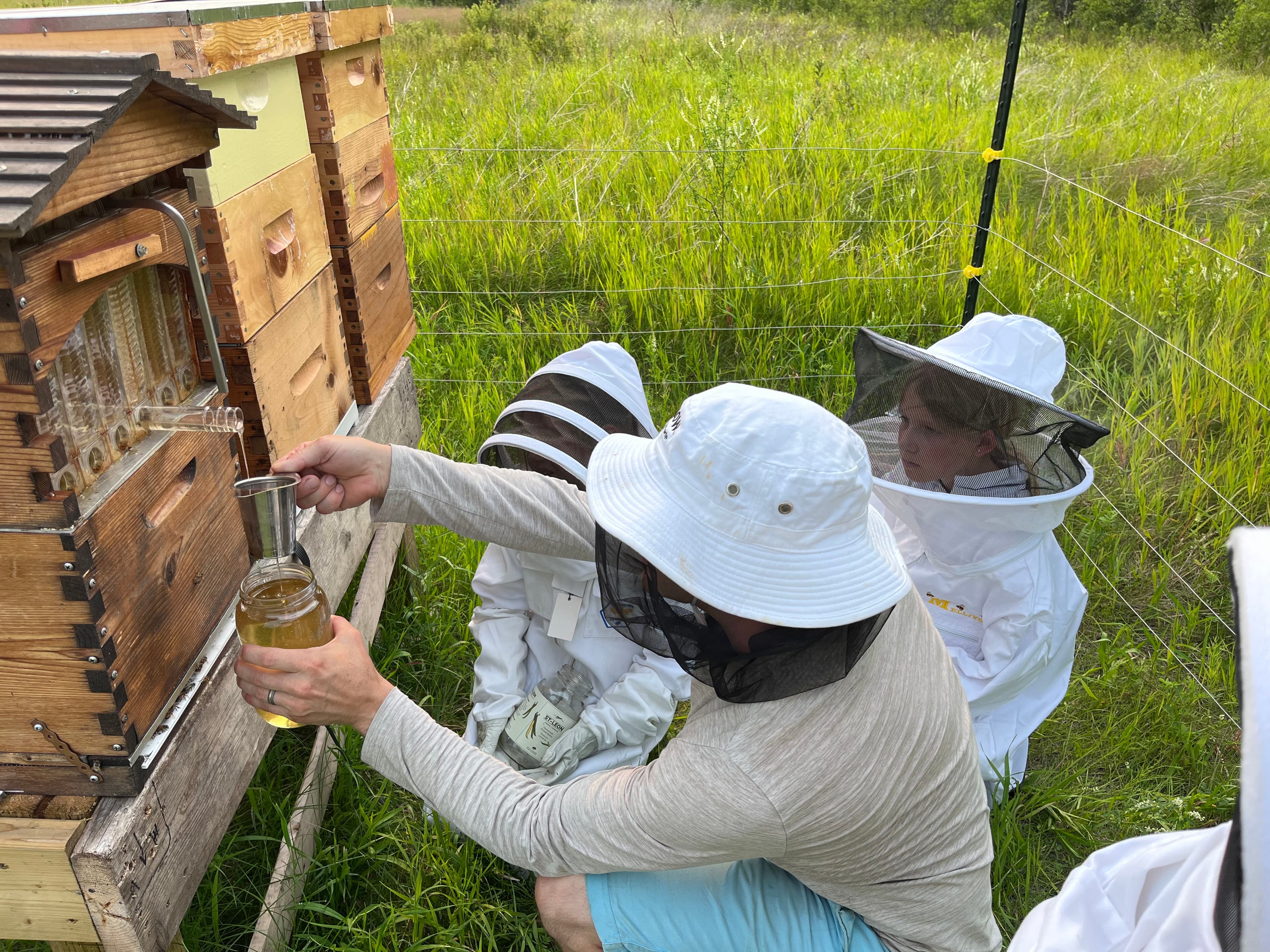
Extracting our first Flow Hive Honey
And it was incredible. It was an experiance for the entire family. Not only did the extraction work, but the taste profile of the honey was something I hadn’t experienced before. That’s where the Flow Hive shines:
- No need for a full extractor setup
- Harvest in small, bloom-specific batches
- Minimal disruption to the bees
From one full frame, I got about 2L of honey.
Once you crack a Flow Frame open, it’s best to extract the whole thing. Otherwise, partially emptied cells will be refilled with fresh nectar, potentially mixing with ripened honey.
So… Does the Flow Hive Have a Place?
Absolutely — but it’s not for everyone, and it’s not for every location.
If you're dealing with wildflowers, pasture blooms, or nectars that stay liquid longer, the Flow Hive can be a joy to use.
If you’re in a mono-culture zone like canola/rapeseed country — it may lead to frustration. The key is understanding your forage sources and how your bees interact with them.
How I Use the Flow Hive Today
I keep one Flow Hive active every year since (in fact 2 of them):
- For hive tours and teaching moments
- When I want to capture a seasonal bloom
- To pull a quick couple jars of the freshest honey to gift.
It’s part of my beekeeping toolkit — not a replacement for more traditional methods, but a valuable addition.
Final Thoughts: To Flow or Not to Flow?
The Flow Hive is not magic, but it is innovative. If you understand its limitations — and use it in the right setting — it can be a wonderful way to experience the joy of beekeeping.
I hope my experience helps you decide whether or not to Flow.