
Beekeeper Software 101: What to Look for in an Apiary App
New to beekeeper software? Here's what a good apiary app should actually do, the features worth paying for, and how APiLOG compares for hobbyist and commercial beekeepers.
Beekeeper Software 101: What to Look for in an Apiary App
Search for "beekeeper software" and you'll get a wall of results that all sound the same: hive tracking, inspection logs, AI insights. If you're trying to figure out what these tools actually do — and whether you need one — this guide breaks down what beekeeper software is, the features worth paying for, and where APiLOG fits if you decide to make the switch from paper.
What Is Beekeeper Software?
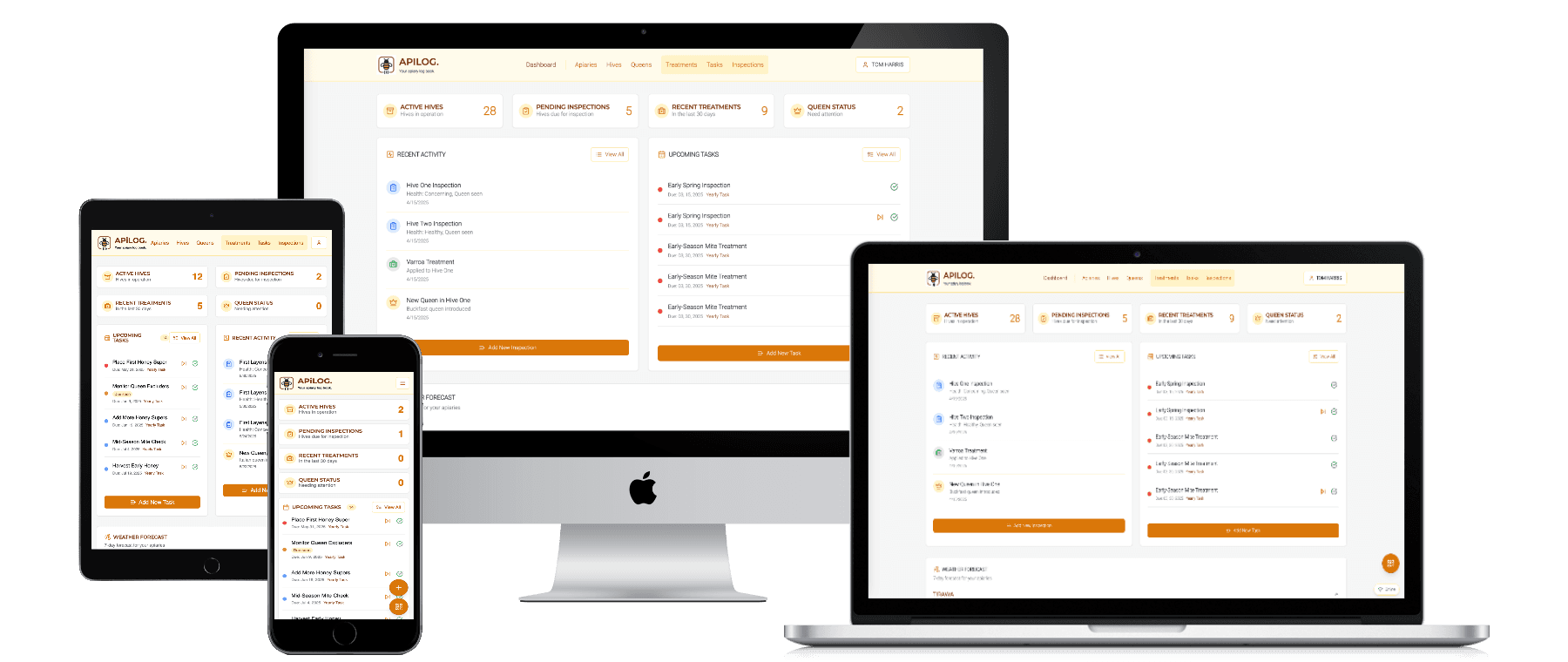
Beekeeper software running across phone, tablet, and desktop
Beekeeper software (sometimes called an apiary app or apiary management software) is a digital system for recording what happens at each hive — inspections, treatments, feedings, queen status, and harvests — instead of tracking it in a notebook, spreadsheet, or your memory. The good ones are built for the bee yard, not the office: quick entry in the field, structured data you can actually search later, and reminders for the tasks that are easy to forget between visits.
Beekeeper Software vs. a Notes App or Spreadsheet
A generic notes app or spreadsheet can technically hold hive records, but it wasn't built for them. There's no reminder for when a mite treatment is due, no way to pull up "every inspection where this queen was marked," and no structure that scales past a handful of hives. Purpose-built beekeeper software adds that structure — fields for queen status, mite counts, and treatments that stay consistent from hive to hive and season to season.
Must-Have Features in an Apiary App
Not every apiary app is built the same way. Here's what separates a tool you'll actually use in the field from one that ends up abandoned after a few weeks.
Hands-Free, Field-Friendly Logging
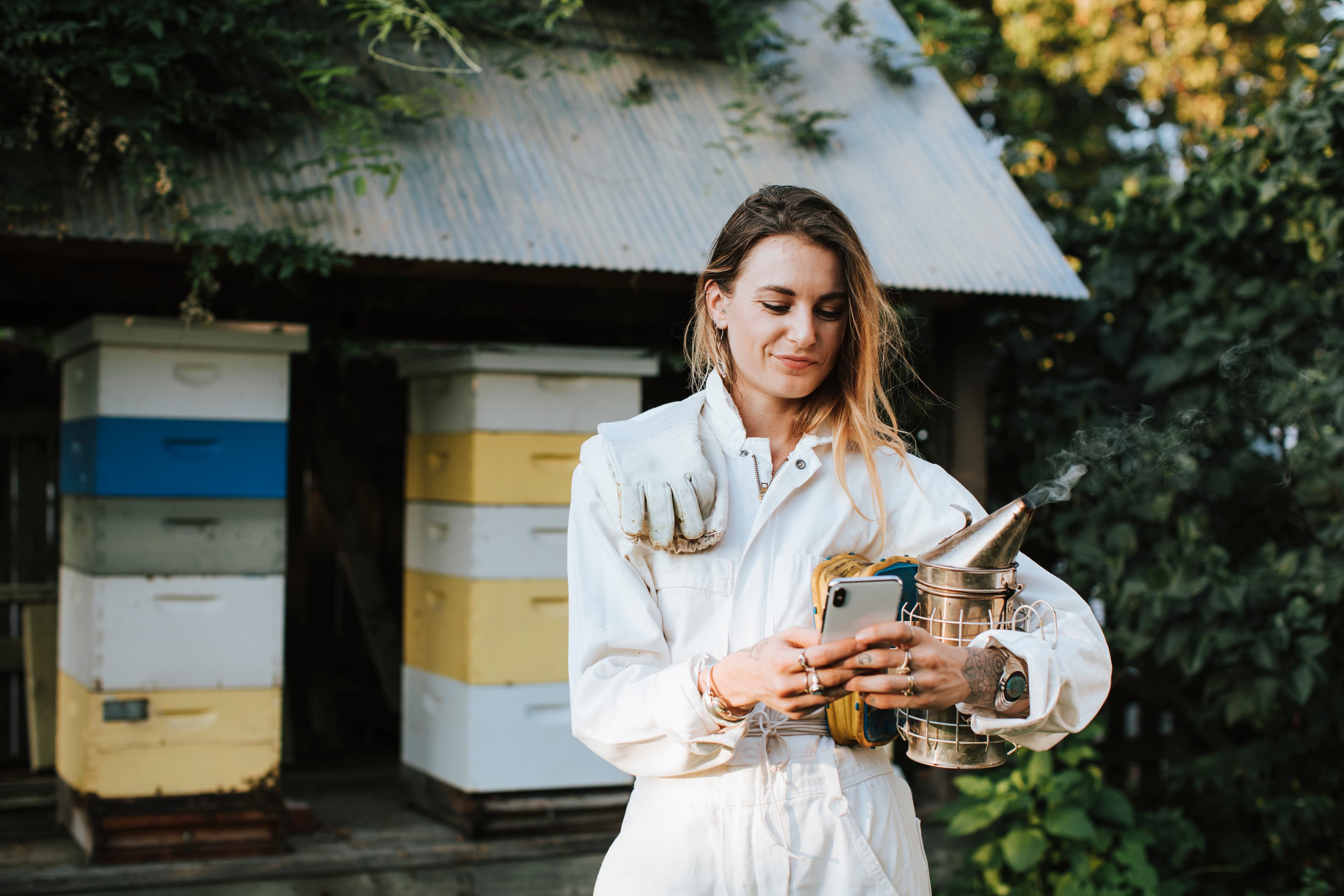
You're holding a smoker in one hand and a frame in the other — typing notes isn't realistic. Look for voice or photo logging that lets you capture what you're seeing without putting down your tools, with the software transcribing and organizing it afterward.
Offline Support
Most apiaries don't have great signal. If your beekeeper software can't log an inspection without a connection, it's not really field software. Offline support that syncs automatically once you're back in range is non-negotiable for anyone working remote yards.
Treatment & Mite Tracking
Mite counts and treatment dates are the records you're most likely to need later — for your own planning, or for compliance and insurance purposes. Mite treatment tracking with dated, per-hive history turns scattered notes into something you can hand off or report on.
Multi-Hive & Multi-Apiary Management
If you run more than a couple of hives, you need apiary management software that lets you view, filter, and act on records across hives and locations at once — not just one hive record at a time.
Team & Multi-User Access
Commercial operations need more than one person logging inspections. Role-based access so you can see who logged what, across a crew, is a feature that separates hobbyist tools from software built for scale.
Free vs. Paid Apiary Management Software
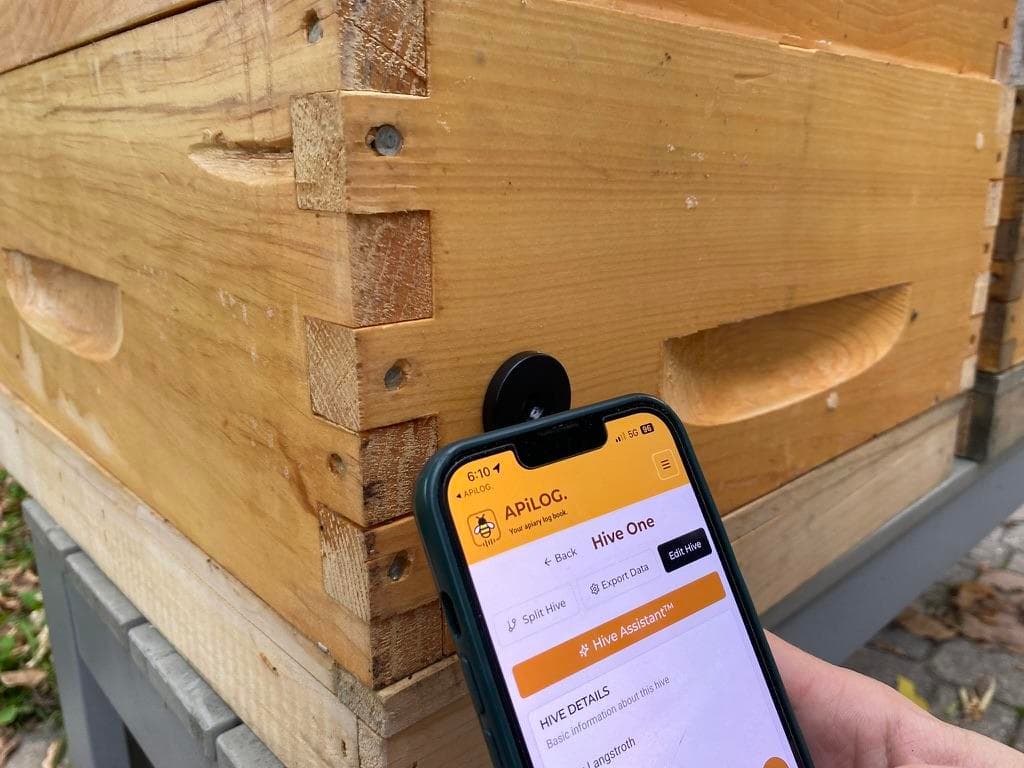
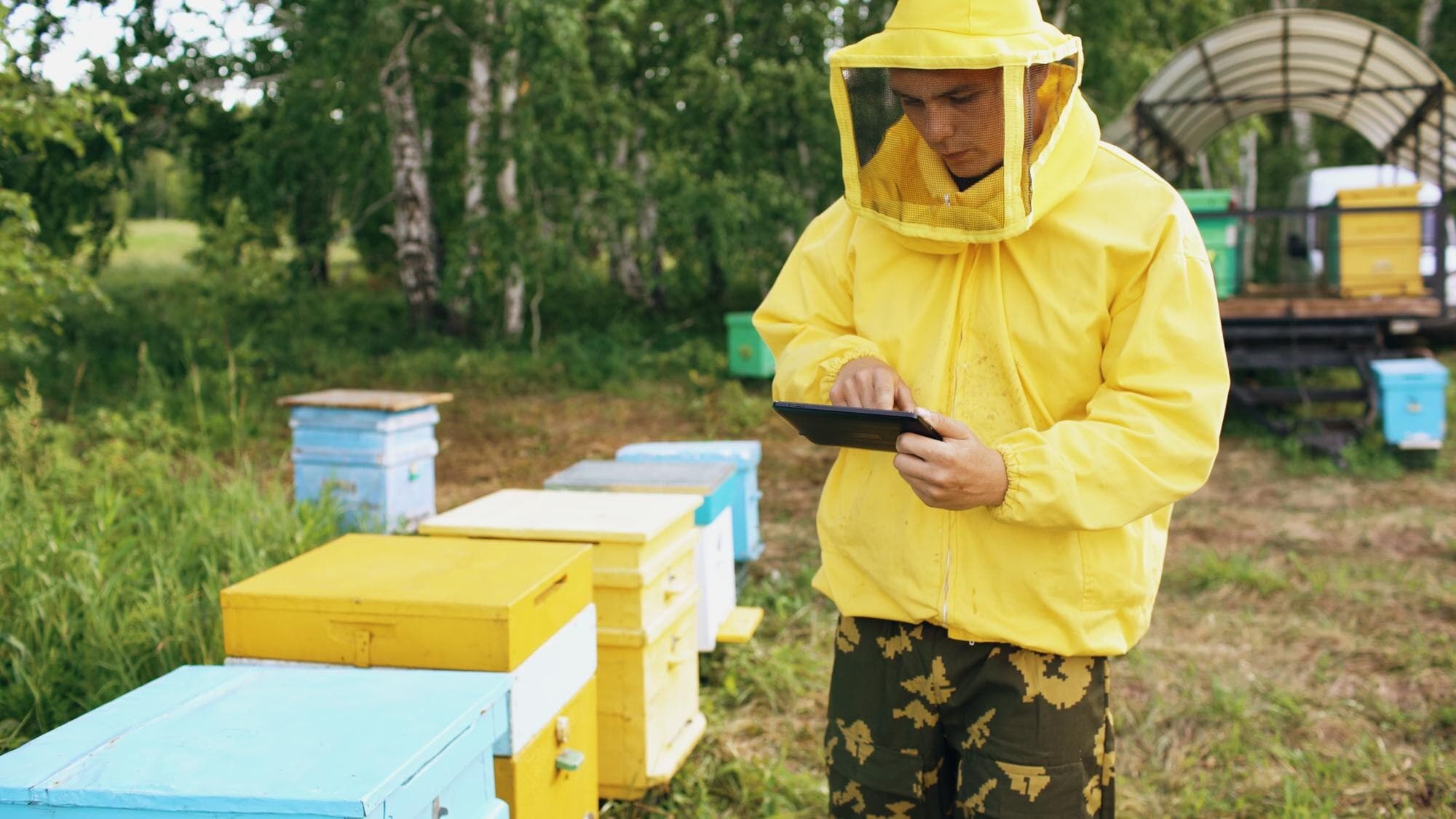
Beekeeper reviewing checklist and photo records on a mobile device during a hive inspection
Most beekeeper software follows a similar pattern: a free tier for a small number of hives so you can try it risk-free, then paid plans that scale with your operation as you add hives, locations, or collaborators. APiLOG, for example, is free for up to 2 hives, with paid plans for 3–10 hives, scaling up for larger commercial apiaries.
How APiLOG Compares as Beekeeper Software
APiLOG was built around the checklist above: voice-first, hands-free logging in the field; full offline support with automatic sync; per-hive mite and treatment tracking; multi-apiary views for larger operations; and role-based team access. It also goes further than most beekeeper software: powerful varroa mite reporting turns treatment history into trend data instead of a list of dates, and a swarm risk score flags at-risk hives before they swarm — a big help if you're new to beekeeping or managing hives in tight urban spaces without years of intuition to lean on. For the full hive-to-jar picture, Honey Profiles give every batch its own traceability page, and commercial operations can export ELAP-ready compliance records for agricultural compensation and insurance claims. It's free to start for up to 2 hives, so you can test it against your own workflow before deciding if it's the apiary app you want to stick with.
See Beekeeper Software In Action
Try APiLOG's hands-free hive logging yourself — no signup required.
Frequently Asked Questions
Is there a free apiary app?
Yes — APiLOG is free for beekeepers with up to 2 hives, so you can try real beekeeper software before committing to a paid plan as your apiary grows.
What's the difference between beekeeping software and an apiary management app?
In practice, not much — beekeepers use "beekeeper software," "beekeeping software," and "apiary app" interchangeably to describe the same category of tool: digital hive record keeping. "Software" sometimes implies a fuller system with reporting and team features, while "app" leans mobile-first, but most modern tools, including APiLOG, cover both.
Can beekeeper software work without internet in the field?
It should. Look specifically for offline support — the ability to log inspections with no signal that automatically syncs once you're back online — since most apiaries aren't near reliable cell coverage.
Got Questions?
I'm an email away from any questions about switching from paper logs to beekeeper software.